
Vietnam War · November 8, 1965
Operation HUMP
The fight for Hill 65
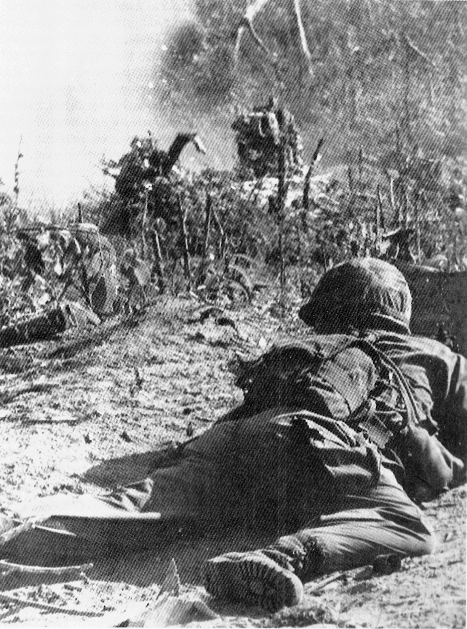
Under fire in the jungles of Vietnam, the 173rd Airborne Brigade fought to hold its ground. Among the wounded, a medic kept moving.
Into War Zone D
A mission that became a fierce battle
Operation HUMP began on November 5, 1965, as U.S. and Australian forces moved into War Zone D near Bien Hoa. The operation’s name marked the halfway point of the brigade’s year in Vietnam.
The 1st Battalion, 503rd Infantry, 173rd Airborne Brigade entered the jungle by helicopter. The 1st Battalion, Royal Australian Regiment operated south of the Dong Nai River as part of the broader mission.
On the morning of November 8, Company C encountered a large, concealed enemy force near Hill 65. Company B moved to its aid. In thick jungle, the fight closed to short range as the paratroopers worked to link their positions and withstand repeated attacks.
The Soldiers held through the fighting. Recovering the wounded brought another challenge: the dense canopy limited helicopter access. Many could not be evacuated until the following morning.
Courage under fire
The medic who kept going

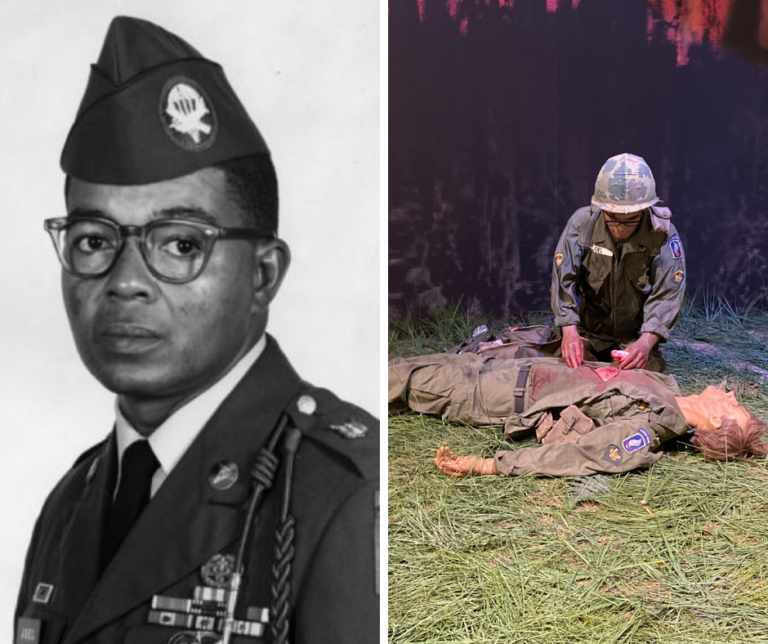
Lawrence Joel, a native of Winston-Salem, North Carolina, served as a medical aidman with Headquarters and Headquarters Company, 1st Battalion (Airborne), 503rd Infantry. When enemy fire struck the advancing Soldiers, he went to work treating the wounded.
Machine-gun fire hit his right leg. Joel bandaged the wound, administered morphine to himself, and continued moving from man to man. He called out encouragement and exposed himself to enemy fire to provide care.
A second bullet lodged in his thigh. Still, he dragged himself across the battlefield and treated 13 more men before exhausting his medical supplies. After obtaining more supplies, he returned to the wounded.
His Medal of Honor citation describes a 24-hour battle. Through it, Joel continued treating and comforting Soldiers until his own evacuation was ordered. His actions saved lives when every movement could have cost him his own.
A legacy beyond the battlefield
President Lyndon B. Johnson presented Joel with the Medal of Honor on March 9, 1967. The award recognized his extraordinary courage and devotion to his fellow Soldiers.


At the U.S. Army Airborne & Special Operations Museum, an exhibit depicting Joel’s actions connects visitors with this story of service. It brings the history of Operation HUMP down to a human scale: a wounded medic, a battlefield, and the Soldiers he refused to abandon.


Meet the people behind the history.
Explore the stories of Airborne and Special Operations Soldiers at the U.S. Army Airborne & Special Operations Museum in Fayetteville, North Carolina.
Plan your visitHelp preserve their stories.
Support the Airborne & Special Operations Museum Foundation, the nonprofit partner that helps support the museum’s exhibits and educational programs.
Support the FoundationSources & further reading
- U.S. Army Medical Department: Lawrence Joel’s Medal of Honor citation
- Congressional Medal of Honor Society: Lawrence Joel
- The Virtual Wall: Hill 65 memorial roster and Company B commander Lowell D. Bittrich’s account
- Adapted from the museum’s original Operation HUMP article; existing museum-hosted photographs retained. Additional photographs supplied for this article; embedded credits preserved.