
Operation MARKET GARDEN
A Bold Plan to Cross the Rhine
In the summer of 1944, General Bernard Montgomery came up with a plan to cross the River Rhine and advance deep into northern Germany to shorten World War II.
Montgomery named his two-part plan Operation Market Garden. Market was the airborne operation employing the U.S. Army's 82d and 101st Airborne Divisions, the British 1st Airborne Division, and the 1st Polish Parachute Brigade.
These forces formed the First Allied Airborne Army, and their objective was to seize key bridges in the Netherlands after landing by parachute and glider.
Once the airborne troops landed, the British XXX Corps would advance over the bridges and cross the Rhine and its tributaries — the Garden portion of the operation.
Two smaller bridges at Veghel and Grave, located between Eindhoven and Nijmegen, also had to be secured.
What Went Wrong
On September 17, 1944, thousands of Allied airborne troops descended into the Nazi-occupied Netherlands. More followed the next day and again the day after.
Allied forces captured key bridges along much of the route, but the overall plan ultimately failed because British XXX Corps could not reach the furthest bridge at Arnhem before German forces overwhelmed the defenders there.
One of the major problems facing the operation was intelligence. Allied planners had not fully accounted for the presence of German armored forces in the Arnhem area.
Around 10,000 men from the British 1st Airborne Division and the 1st Polish Independent Parachute Brigade landed in the Arnhem area, but their landing zones were approximately seven miles from the bridge.
Only one battalion reached the objective. The remaining airborne troops were eventually compressed into a defensive pocket around Oosterbeek.
The airborne forces had relatively few weapons capable of effectively confronting German tanks, contributing to heavy losses and large numbers of troops being captured.
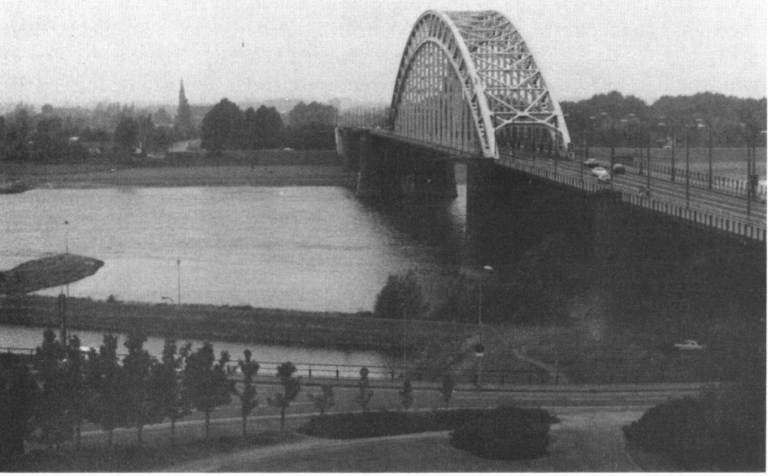
Units of the British XXX Corps, working alongside the U.S. Army's 82d Airborne Division, captured the Nijmegen bridge.
Even after Nijmegen was secured, XXX Corps could not reach the airborne troops at Arnhem in time.
Much of the British ground advance had to move along a single narrow causeway, leaving the column vulnerable to traffic congestion and German counterattacks.
The operation was also complicated by a shortage of transport aircraft. Instead of delivering all of the airborne troops at once, the forces had to be flown into the Netherlands in three separate lifts.
The wooded landscape also restricted the effective range of wireless equipment. Communication failures further complicated reinforcement and coordination between Allied forces.
The Final Bridge Remained Out of Reach
By September 25, it had become clear that the position of the British 1st Airborne Division could no longer be held. Evacuation began that same day.
Following the failure of Operation Market Garden, the Allied crossing of the Rhine and the capture of Germany's industrial heartland were delayed by approximately six months.
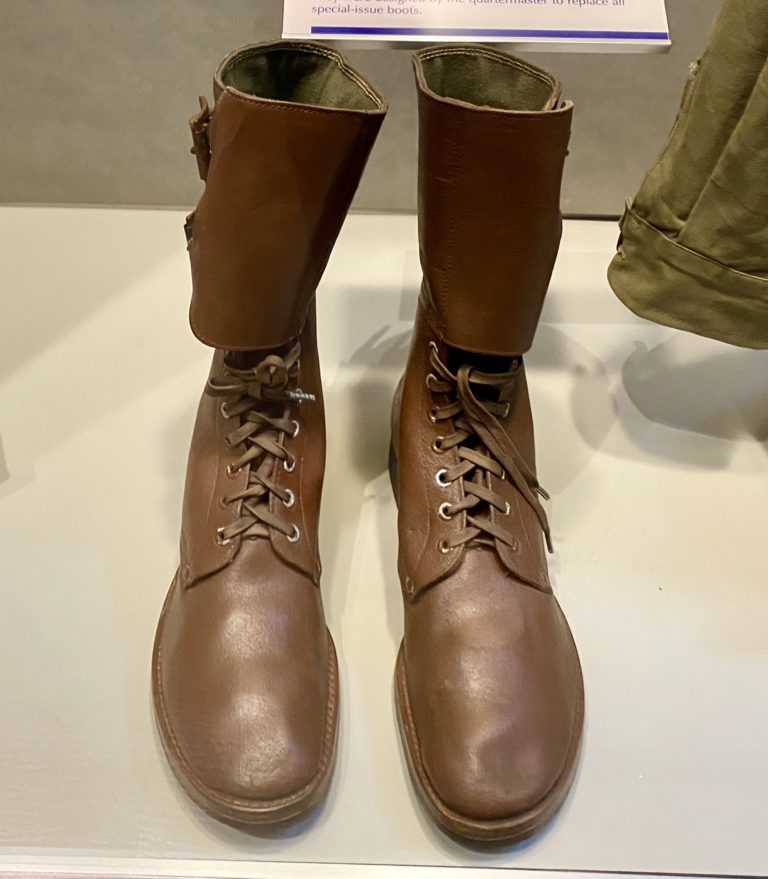
Shop 82d & 101st Airborne merch
Honor the Airborne divisions that jumped into the Netherlands during Operation Market Garden.
Shop NowHelp Keep These Stories Alive
The Airborne & Special Operations Museum Foundation supports exhibits, educational programs, preservation efforts, and experiences that allow stories like Operation Market Garden to continue reaching future generations.
Support the Museum