The Museum Is closed on: Thanksgiving, Christmas Eve, Christmas Day, New Year’s Eve, New Year’s Day, Easter Sunday.
For the safety and security of our visitors and collections, bags are not permitted inside the museum. Any bags brought into the building may be subject to search.
The Museum is open on the following Federal holidays: Memorial Day, Independence Day, and Veterans Day
All media inquiries, professional videography, filming, or photography of the museum grounds and galleries must be approved by Fort Bragg Public Affairs: (910) 396-6991. No exceptions.
VISITOR INFORMATION
While admission is free, donations are greatly needed and appreciated. Please consider an online donation to support the future of the ASOM once you sign-in to the Museum.
Handicap parking is available near the entrance, and all exhibits and the grounds are accessible. Visit our Information Desk if a wheelchair is needed for your visit.
We recommend allowing 2-3 hours to tour the museum and grounds. No food, beverages or smoking are permitted in the museum, or galleries. Flash photography is also not permitted. Professional photographers may inquire if they wish to take limited photographs. Operating drones and drone photography are not permitted on the grounds of the ASOM.
For Visitors with Service Animals or Emotional Support Animals:
Service animals specially trained to assist a person with a disability are welcome in all of the Museum’s public spaces.
Emotional support animals, comfort animals, and therapy dogs are not service animals under Title III of the ADA and are not permitted in the Museum.
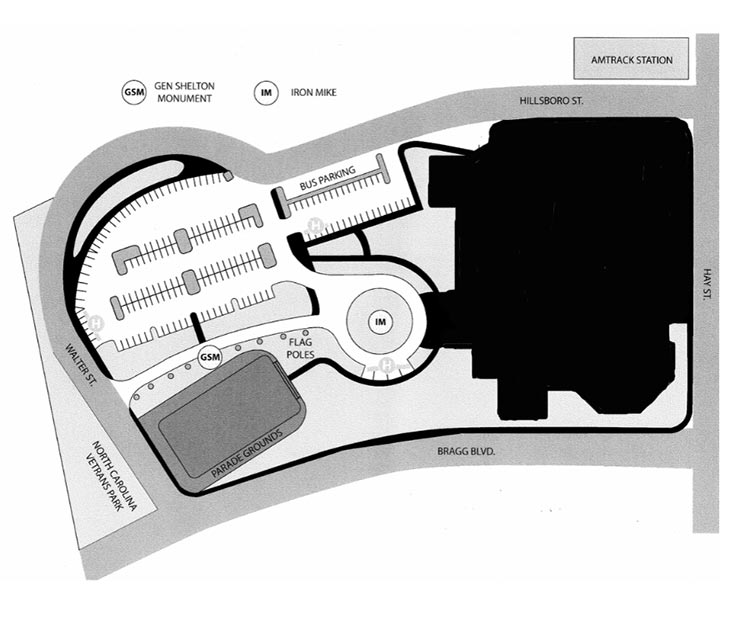
There is plenty of free parking available in front of the museum and can accommodate RVs and buses. Large vehicle parking is available along Hillsboro Street and in the parking lot adjacent to the North Carolina State Veterans Park.
POW/MIA DAY
You Are Not Forgotten
Three Things to Know About POW/MIA Recognition Day
Honoring America’s former prisoners of war and remembering the service members who have yet to return home.
The words “You Are Not Forgotten” stand at the heart of the national POW/MIA remembrance movement. They honor the American service members who endured captivity, those who returned home, and those whose fate remains unknown.
National POW/MIA Recognition Day calls the nation to remember their courage, acknowledge the sacrifices carried by their families, and continue the work of accounting for those who remain missing.
A National Day of Remembrance
What is POW/MIA Recognition Day?
National POW/MIA Recognition Day is observed on the third Friday of September. Unlike many military observances, the date is not tied to one particular war. It honors former prisoners of war from every conflict and remembers the Americans who remain missing in action.
The observance was formally established in 1979 following years of advocacy by families seeking answers and full accountability for their missing loved ones. Ceremonies are now held across the country at military installations, government buildings, schools, veterans’ facilities, and other places of remembrance.
The Mission Continues
Thousands of Americans Remain Unaccounted For
More than 80,000 Americans remain missing from conflicts dating back to World War II. Behind that number are individual service members, families who have waited for answers, and generations committed to bringing them home.
The Defense POW/MIA Accounting Agency continues the worldwide mission to recover missing personnel, identify remains, and provide the fullest possible accounting to their families and the nation.
A National Symbol
The Creation of the POW/MIA Flag
In 1971, Mary Hoff—the wife of Navy Lt. Cmdr. Michael Hoff, who was listed as missing in action during the Vietnam War—helped develop the idea for a national flag that would keep America’s missing service members in the public consciousness.
World War II pilot Newt Heisley designed the black-and-white emblem. Its stark silhouette, guard tower, and barbed wire became one of the nation’s most recognizable symbols of remembrance, anchored by the promise: “You Are Not Forgotten.”
From the Museum Galleries
Five Years to Freedom: The Story of James “Nick” Rowe
As a Special Forces first lieutenant, James “Nick” Rowe deployed to Vietnam in 1963 to advise and assist the South Vietnamese government by helping organize, train, equip, and employ the Civilian Irregular Defense Group. On October 29, 1963, Rowe was captured by the Viet Cong during a CIDG operation alongside Capt. Humbert R. “Rocky” Versace and Sgt. Daniel L. Pitzer.
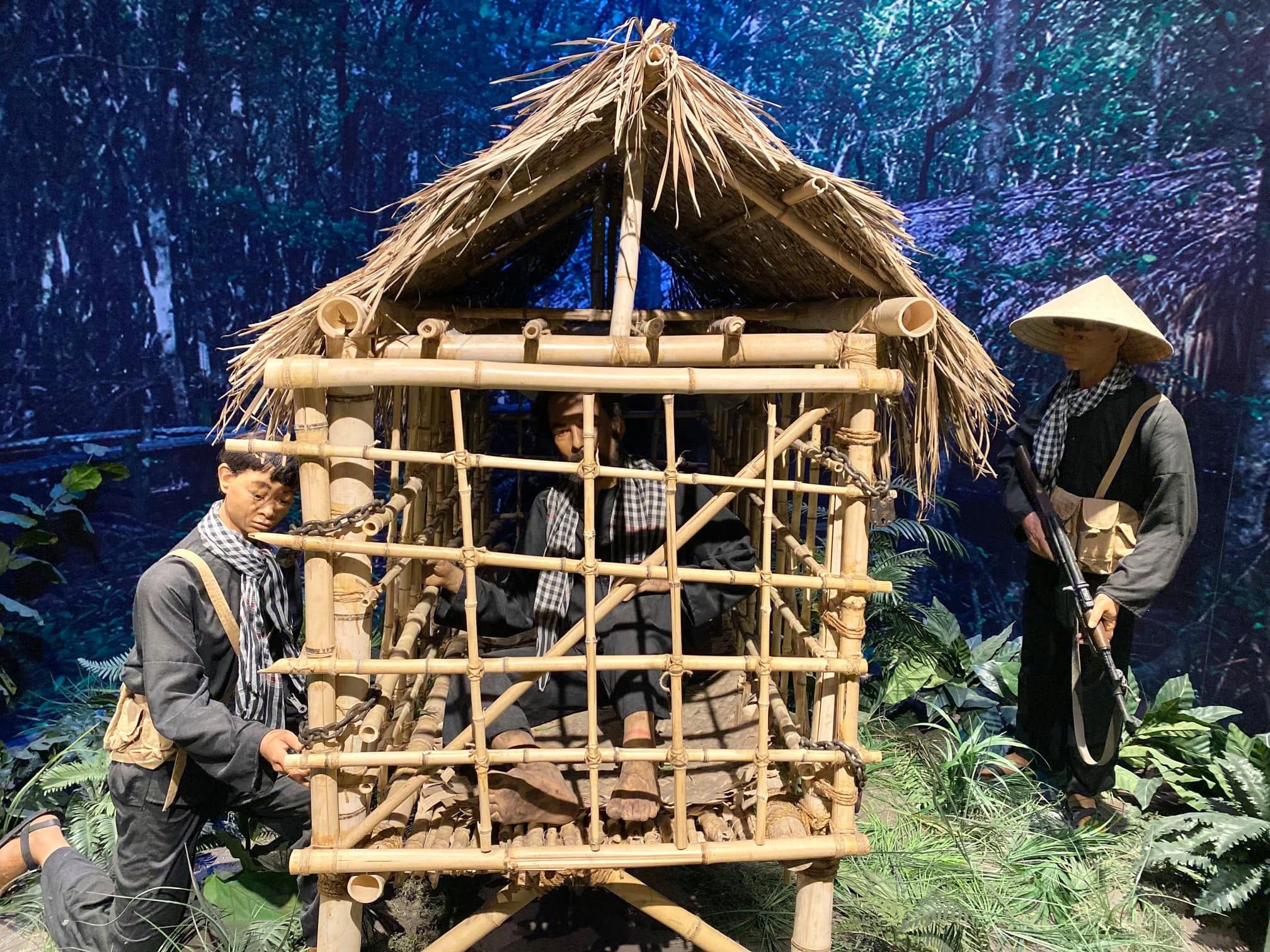
During his captivity, Rowe was moved among POW camps in South Vietnam and spent much of his imprisonment in the U Minh Forest—known as the “Forest of Darkness.” Confined in a cage and subjected to physical and psychological abuse, he continued to resist his captors and attempted to escape three times.
On New Year’s Eve 1968, Rowe escaped after five years in captivity, evaded his guards, and flagged down an American helicopter.
After returning home, Rowe became a powerful advocate for Survival, Evasion, Resistance, and Escape training for Soldiers serving in high-risk specialties. His work helped shape the Army’s SERE program and better prepare Special Forces Soldiers to avoid capture or survive captivity.
The photograph above shows a display in the U.S. Army Airborne & Special Operations Museum’s gallery recreating Rowe’s imprisonment.
Read His Story
Five Years to Freedom
Rowe’s memoir documents his capture, resistance, repeated escape attempts, and extraordinary journey home after five years as a prisoner of war.
A portion of all Museum Store sales helps fund Museum exhibits and programs.
Your support helps the Foundation preserve history, develop educational programs, and share the stories of America’s Airborne and Special Operations Soldiers with future generations.
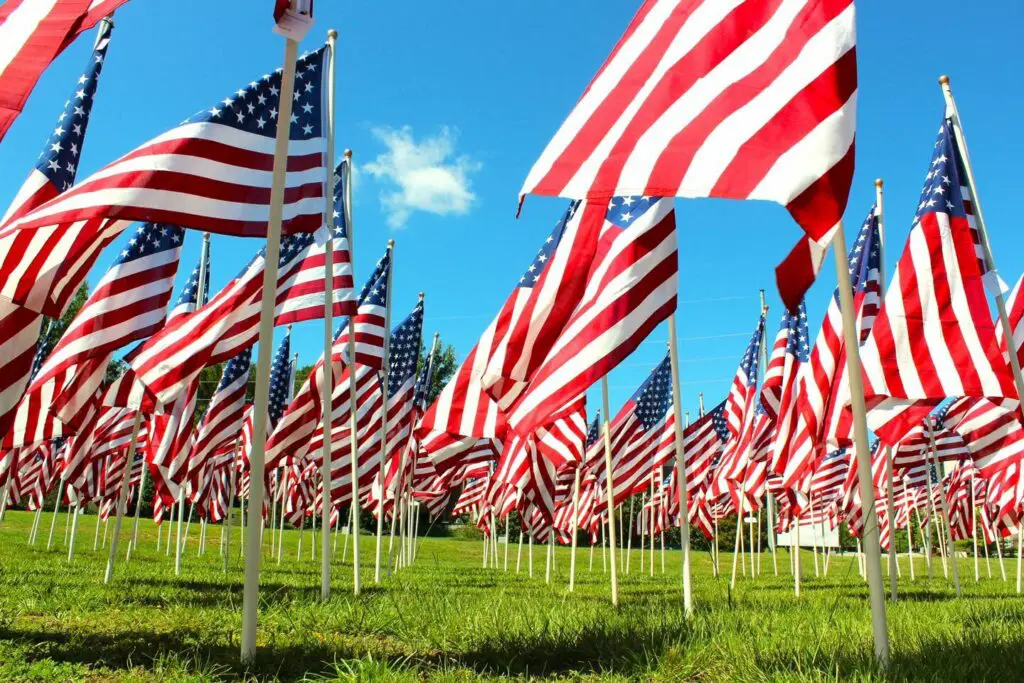
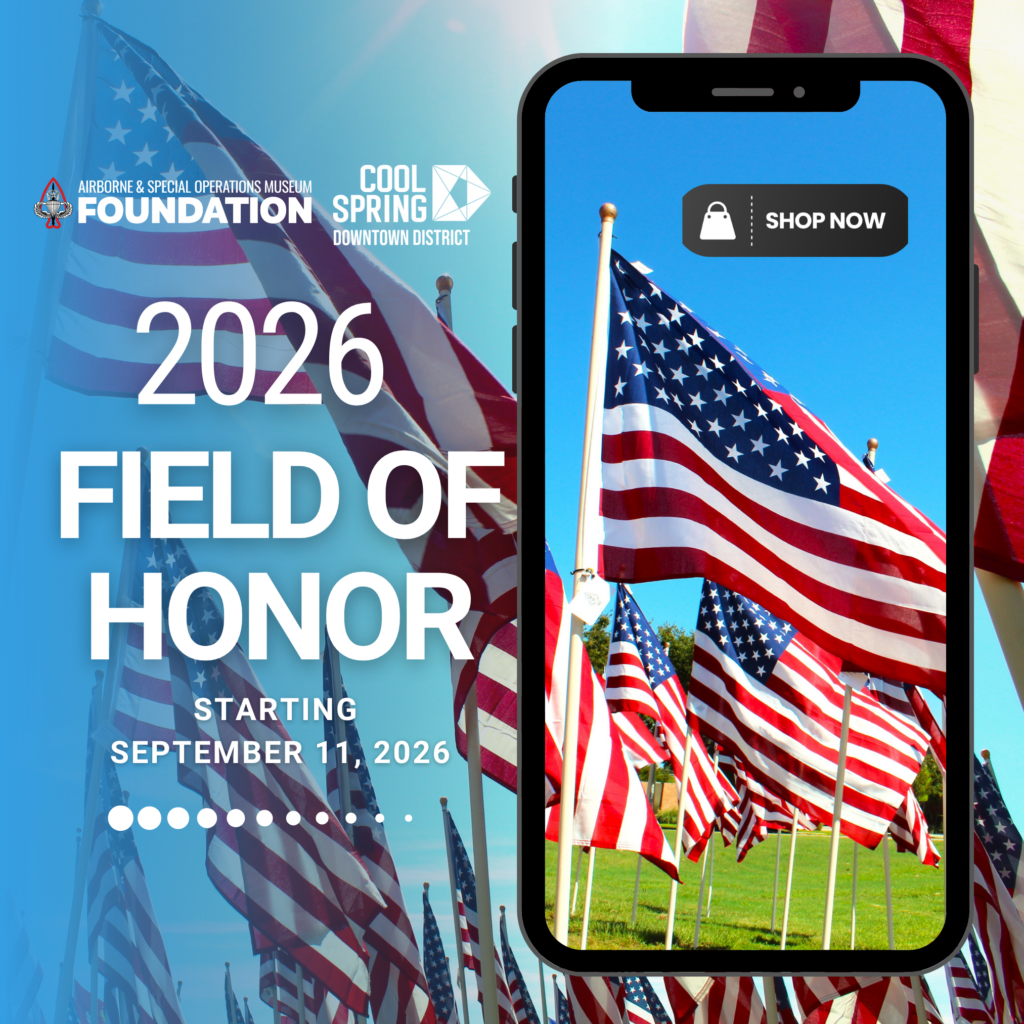
Each fall, the grounds of the U.S. Army Airborne & Special Operations Museum are transformed into the Field of Honor, a moving display of hundreds of American flags dedicated to the people who have shaped our lives and our nation.
A Field of Honor flag may be dedicated to a veteran, active-duty service member, first responder, family member, friend, or loved one. Some honor extraordinary acts of service. Others celebrate lives well lived. Every flag represents a story worth remembering.
More than a display, the Field of Honor is a place for reflection, gratitude, and remembrance. As visitors walk among the flags, they are reminded that behind every name is a person whose legacy continues to inspire others.
Opening on September 11
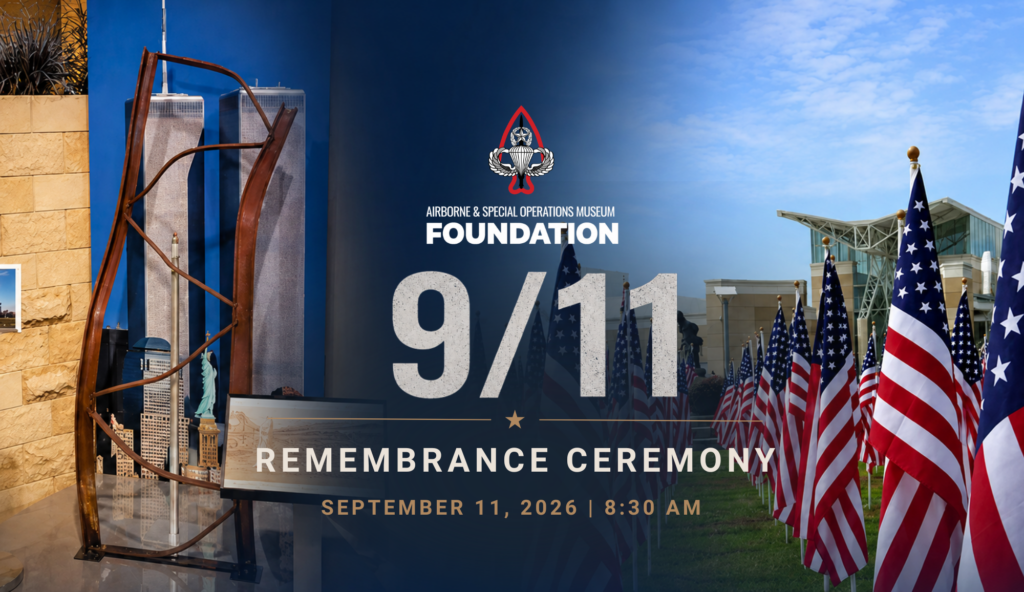
The 2026 Field of Honor will officially open during the Airborne & Special Operations Museum Foundation’s September 11 Remembrance Ceremony on September 11, 2026, beginning at 8:30 a.m.
Held on the 25th anniversary of the September 11 attacks, the ceremony will honor the nearly 3,000 lives lost, the first responders who answered the call, and the generations of service members who served in the Global War on Terror.
Following the ceremony, guests are invited to walk through the Field of Honor and visit the Museum’s special 9/11 focus exhibit, reflecting on the events of September 11 and the legacy of courage, sacrifice, and service that followed.
The Field of Honor will remain on display through Veterans Day, giving the community the opportunity to return throughout the season to reflect, remember, and honor those who have made a lasting impact.
Field of Honor flag dedications are available through August 15.
Whether you’re honoring a veteran, active-duty service member, first responder, family member, or someone whose memory deserves to live on, your tribute becomes part of a display that inspires thousands of visitors each year.
Every flag helps tell a story. Whose story will you honor?
Purchase your Field of Honor flag today and become part of this year’s tribute.
Host Your Event at the U.S. Army Airborne & Special Operations Museum
From military ceremonies and professional receptions to private celebrations, the U.S. Army Airborne & Special Operations Museum offers a setting unlike any other in Fayetteville.
Welcome guests into a space defined by dramatic architecture, Airborne history, and a powerful sense of place. The Museum offers indoor and outdoor settings for ceremonies, receptions, meetings, and meaningful celebrations.
Facility rentals begin at $1,500.Rates vary by event type. Availability, eligibility requirements, and facility policies apply.
Event Rental Rates
Military event$1,500
Private party or reception$2,000
Government or professional association$2,500
Corporate event$3,500
Explore the Spaces
Find the setting for your event.
Each space offers a different way to gather within the Museum’s distinctive architecture and grounds.
Lobby
5,000 sq. ft. of terrazzo floor
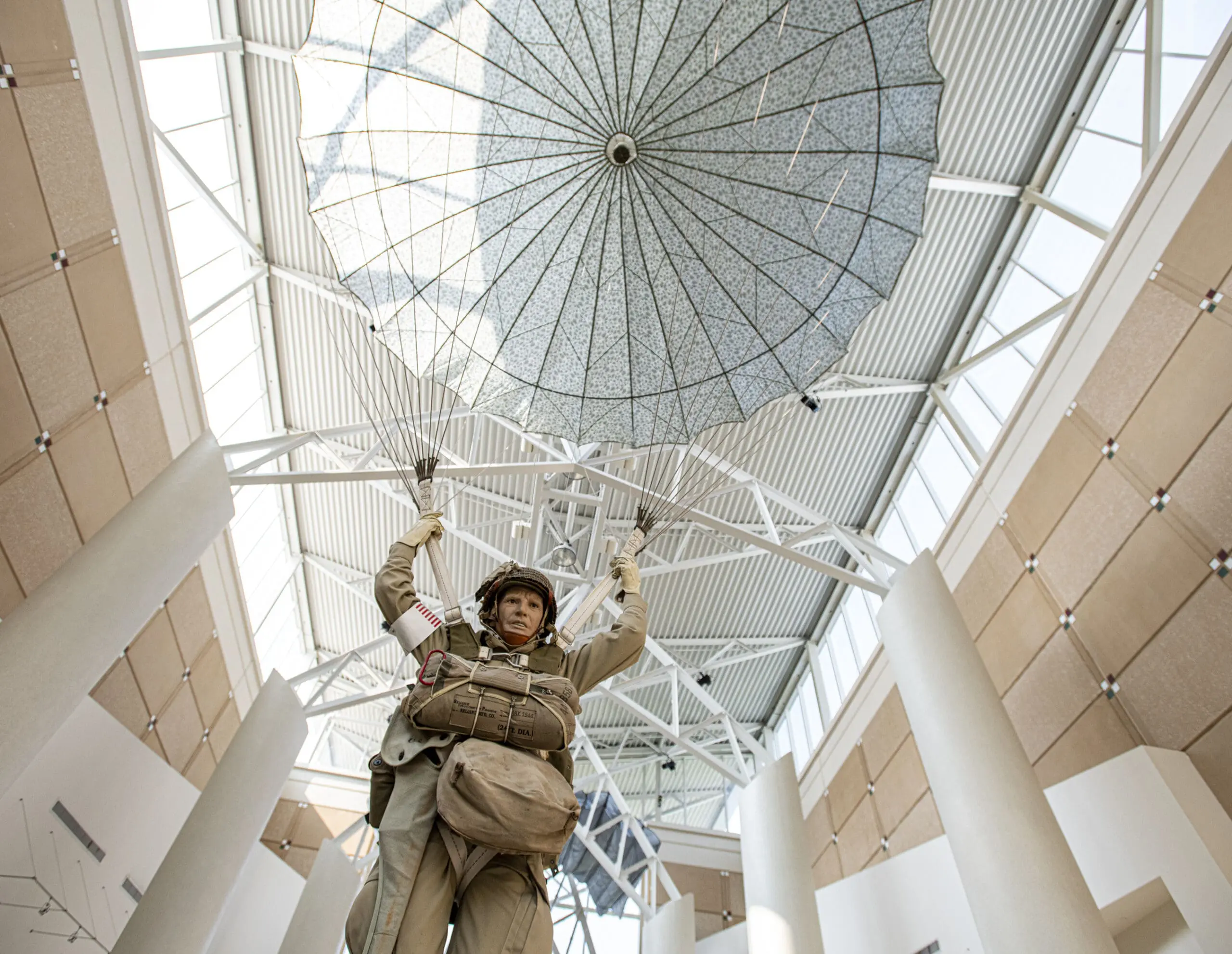
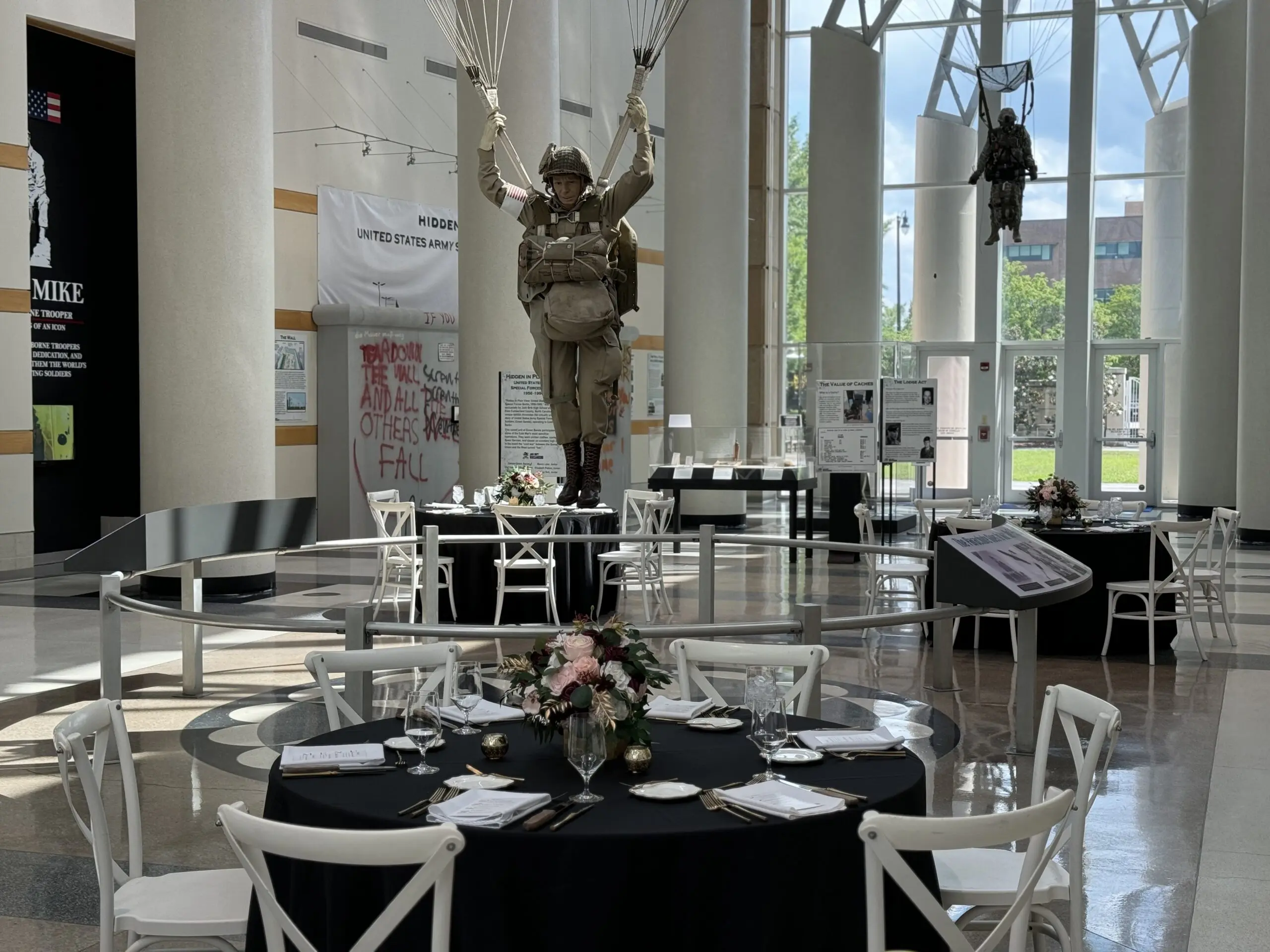
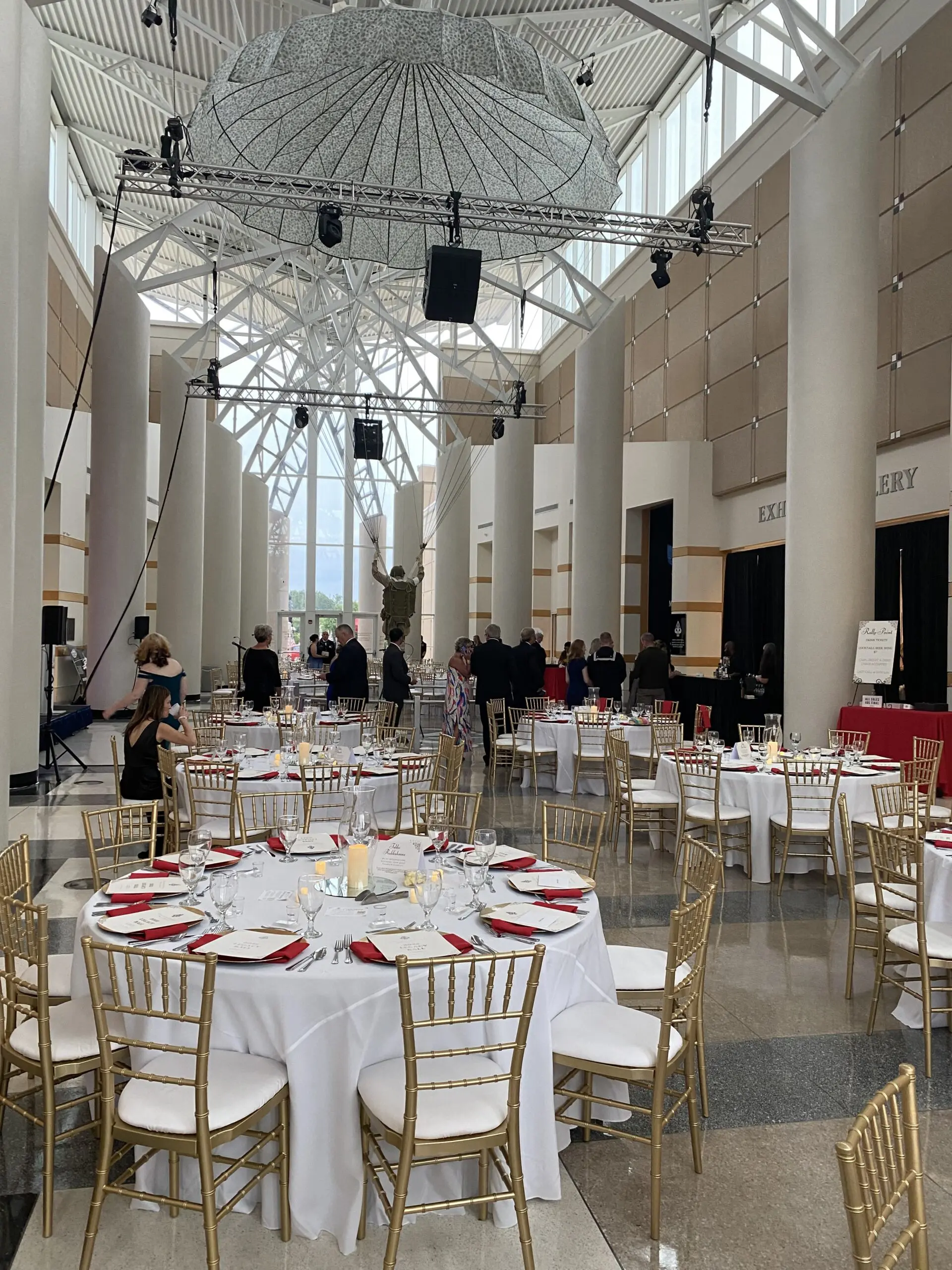
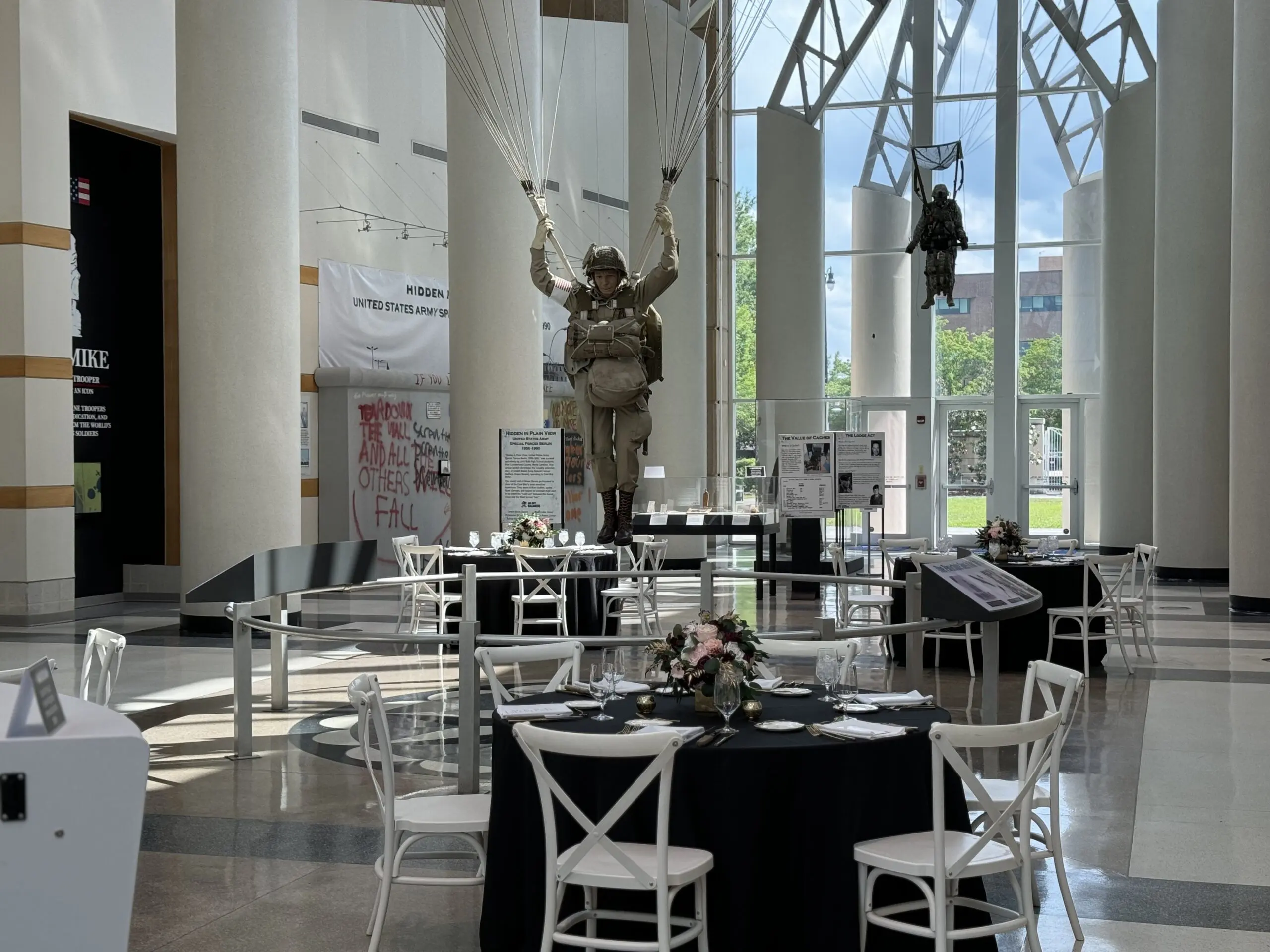
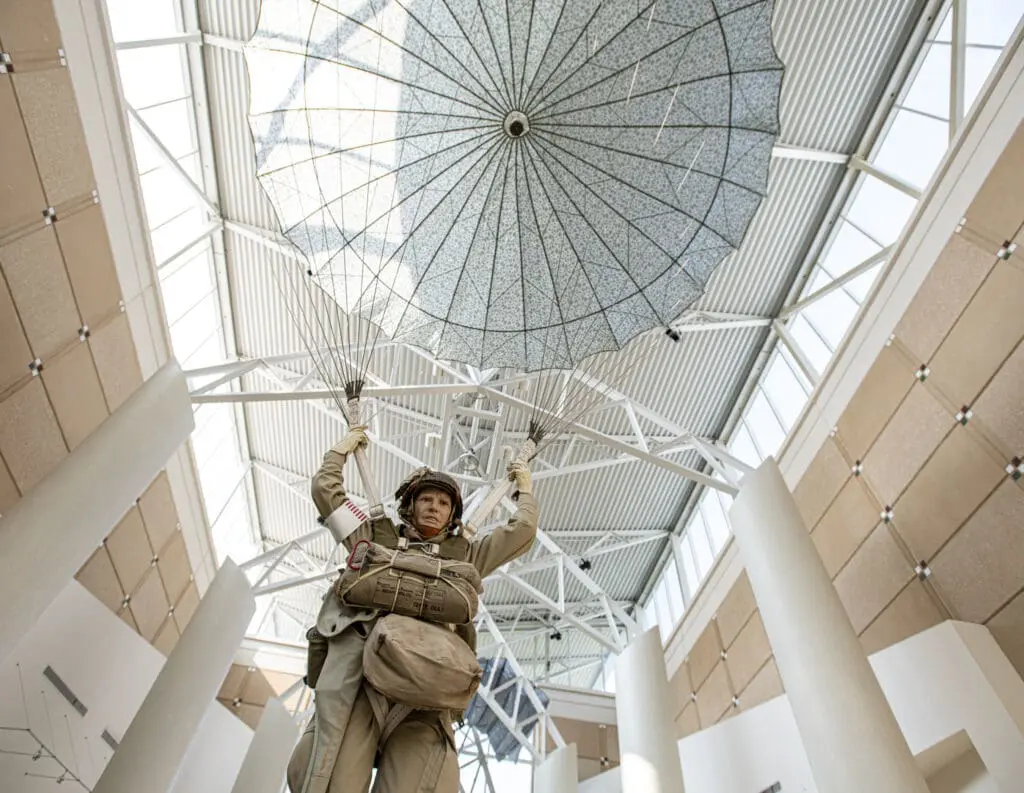
Sixteen large round columns and five-story glass walls frame the lobby, with a fully deployed parachute and paratrooper behind a brushed aluminum rail at its center and a second parachute deployed overhead. Unit lineages and honors line the walls.
Availability during regular museum hours is limited and subject to museum operations.
Reflection Garden
Outdoor · Hay Street side
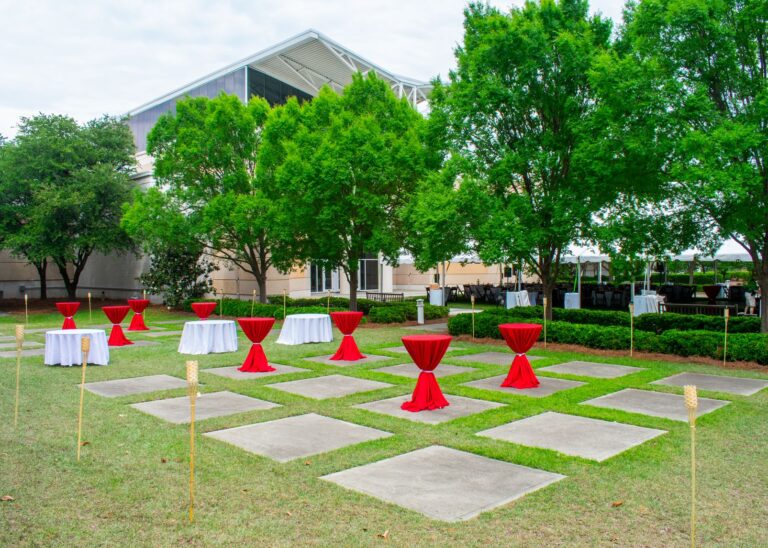
A fresh-air way to experience the museum. Walkways are lined with granite pavers engraved with the names of soldiers, family members, and other supporters of the museum.
Parade Field
Outdoor · Bleacher seating for 60
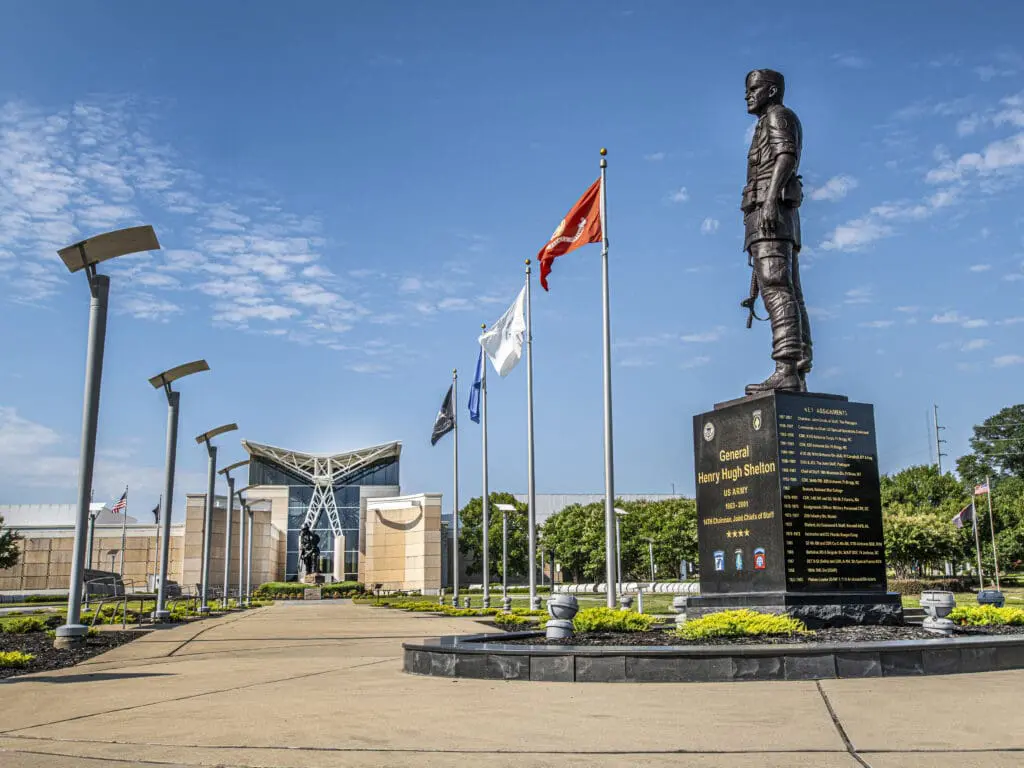
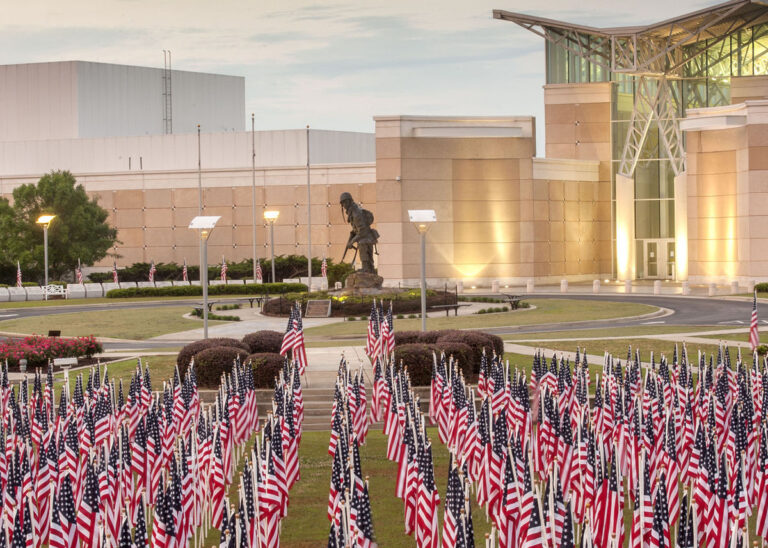
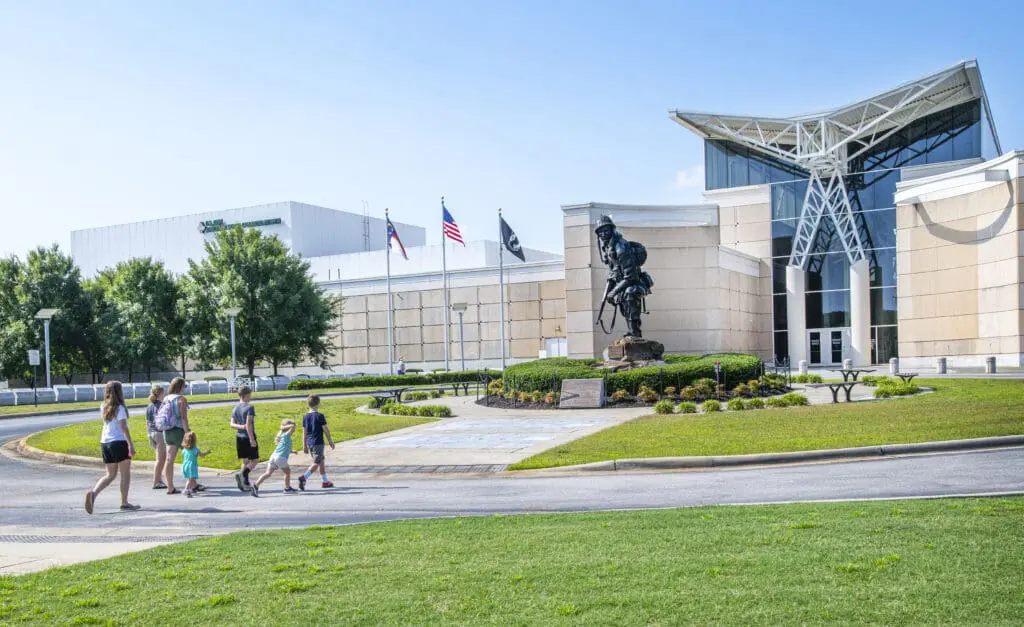
A groomed field directly in front of the museum with a sidewalk connection and small concrete bleacher-style seating area. The paratrooper statue and flag-lined approach create a fitting setting for ceremonies, receptions, military events, and memorials.
Rental Information
When can I rent the Museum?
Tuesday–Saturday 4:00–9:00 PM
Setup may begin at 4:00 PM unless prior approval has been granted.
Reservations are processed on a first-come, first-served basis.
The Museum is unavailable for rental on Sundays, Mondays, federal holidays, and certain blackout dates.
The Museum is a raw event venue. Clients are responsible for outside vendors, including tables, chairs, linens, catering, and décor.
Use beyond the contracted rental period may result in additional fees.
Event guidelines: All events are subject to ASOMF approval and facility policies. The ASOM facility may not be used for political campaigning, religious activities, or fundraising activities other than fundraising conducted for the direct support of ASOM in accordance with the ASOMF nonprofit charter. Exhibit galleries are not open for after-hours events.
Request an Event
Tell us what you’re planning.
Complete the private event request form below. The ASOMF team will follow up regarding availability, eligibility, and next steps.
A VIRTUAL BOOK DISCUSSION WITH RICK BEYER
In the summer of 1944, a handpicked group of young GIs—including such future luminaries as Bill Blass, Ellsworth Kelly, Arthur Singer, Victor Dowd, Art Kane, and Jack Masey—landed in France to conduct a secret mission. Armed with truckloads of inflatable tanks, a massive collection of sound-effects records, and more than a few tricks up their sleeves, their job was to create a traveling road show of deception on the battlefields of Europe, with the German Army as their audience.
From Normandy to the Rhine, the 1,100 men of the 23rd Headquarters Special Troops, known as the Ghost Army, conjured up phony convoys, phantom divisions, and make-believe headquarters to fool the enemy about the strength and location of American units. Between missions the artists filled their duffel bags with drawings and paintings and dragged them across Europe. Every move they made was top secret and their story was hushed up for decades after the war’s end. The Ghost Army of World War II is the first publication to tell the full story of how a traveling road show of artists wielding imagination, paint, and bravado saved thousands of American lives.
About the Author
Rick Beyer is a best-selling author, an award winning documentary producer, and a long-time history enthusiast. With a take on history that is both humorous and illuminating, he has appeared on CBS News, MSNBC, CNN, The Discovery Channel, NPR and Fox News.
Rick wrote and produced the PBS documentary The Ghost Army, which premiered on PBS in 2013. He also co-authored (with Elizabeth Sayles) the New York Times bestseller, “The Ghost Army of World War II”. The book and documentary are currently being developed as a Hollywood movie by (American Sniper) producer Andrew Lazar and Universal Studios.
Please enjoy this recording of the webinar that originally took place on March 23, 2021. The moderator for this event was ASOM Curator, Jimmie Hallis.
Home
EXPERIENCE THE LEGACIES OF THE BRAVE
The U.S. Army Airborne & Special Operations Museum brings history to life, honoring the courage, sacrifice, and innovation of America’s Airborne and Special Operations Forces. Step into immersive exhibits, explore real stories of heroism, and witness the evolution of elite warriors from World War II to today
Airborne & Special Operations Museum FoundationAirborne & Special Operations Museum FoundationAirborne & Special Operations Museum Foundation
HONOR HISTORY. SUPPORT THE MISSION.
The U.S. Army Airborne & Special Operations Museum preserves the legacy of our Airborne and Special Operations Forces, ensuring their courage and sacrifices are never forgotten. Your support helps us continue our mission through educational programs, historical exhibits, and community outreach.
The Airborne & Special Operations Museum Foundation has served our community for 24 years, at the side of the U.S. Army proudly preserving the rich history and sacrifices of the American Soldiers who served in Airborne and Special Operations units since World War I. Within these Museum walls, the stories of bravery, innovation, and resilience come alive, inspiring generations, and fostering a deeper appreciation for the men and women who have defended our nation.
However, we face a critical challenge. The ASOM Foundation is experiencing a significant loss of major funding, jeopardizing our ability to continue our vital museum support mission through public programs, educational opportunities, and exhibit support. Without your help, we may be forced to dim the light on crucial chapters in military history past and present.
But there is still hope.
Your generous donation, no matter the size, can make a real difference. Here is how your contribution will help:
Maintain our world-class exhibits: Your support ensures the artifacts, uniforms, and interactive displays that bring history to life remain accessible for future generations.
Expand educational programs: We offer educational programs for students of all ages. Your donation helps fund these initiatives, fostering patriotism and a deeper understanding of the sacrifices made for our freedom.
Honor our Veterans: The museum serves as a sanctuary for Veterans to connect with their past and share their stories. Your contribution ensures they have a place of honor within our walls.
Here is how you can help:
Donate online: Visit our secure website at www.asomf.org/donate/ to make a quick and easy one time or recurring donation.
Mail a check: Send your contribution to ASOM Foundation, 100 Bragg Blvd. Fayetteville, NC 28301
Together, we can keep the stories of bravery and sacrifice alive. Please, donate today and ensure the Airborne & Special Operations Museum Foundation continues to be a beacon of support for military history for generations to come.
With heartfelt gratitude,
Renee Lane
Executive Director
Airborne & Special Operations Museum Foundation
“Finding Waypoints” Event Footage
Terese Schlachter & Colonel Gregory Gadson (Ret.) discussed their new book, Finding Waypoints: A Warrior’s Journey Towards Peace and Purpose on February 7th, 2024 at the U.S. Army Airborne and Special Operations Museum. Click here to view the video of the event.
About The Event:
After he lost both legs in an IED attack in Iraq in 2007, Colonel Gadson felt his sense of self had been obliterated. Yet within eight months, he was mentoring the NY Giants to their 2008 Super Bowl win and would later star in the major motion picture, Battleship. He is now a much sought-after motivational speaker. The co-authors discussed Colonel Gadson’s early life, his path from the Army football team to a distinguished military career, his injury, its incredible aftermath, and the waypoints that sustained him throughout.
The title of the book comes from an encounter with an Army major during his posting at the former Fort Bragg, now Fort Liberty. It’s an inspirational story, and one that will resonate with today’s soldiers.
About The Book:
A hybrid of biography and autobiography, the book is the result of an extraordinary relationship between journalist Schlachter and her subject Gadson—a man who survived the worst and has used his experience to enrich the lives of others.
What starts as a minute-by-minute account of a disaster in a war zone quickly turns into an uplifting story of survival and triumph. Within eight months of losing his legs due to injuries sustained in Iraq, Gadson mentored the New York Giants to their Super Bowl win in 2008. “Greg instilled in our team a tremendous example of sacrifice and self-denial for a greater cause,” says Tom Coughlin, the team’s former coach.
Publishers Weekly calls Finding Waypoints “Intense and inspiring…a fast-moving, unsparing account of a fascinating life.” Gary Sinise, actor and founder of the Gary Sinise Foundation says “Colonel Greg Gadson’s journey is humbling, healing and inspirational. Finding Waypoints is a story of hope and recovery, a motivational biography told from inside one of our nation’s military families who gave so much to this country and in the end, see their sacrifice as a blessing. I have known Colonel Gadson since the early days of his injury and am honored to call him friend. This story will lift you up.”
About the Authors:
Terese Schlachter is a Washington-DC based writer and producer of videos and documentaries (NBC News, Dept of Defense) who first met Colonel Gadson when covering the new veterans facility at the former Walter Reed Army Medical Center in 2007. She became his fast friend and confidante during his painful recovery and rehabilitation. Terese is a three-time Emmy Award-winning television producer, and founder and Chief Storyteller of Ridgeback Communications. Her short film “Picture Perfect” was nominated for “Best Short” at the 2017 DC Indie Film festival as well as a National Academy of Television Arts and Sciences Emmy. She lives in Shady Side, Maryland with her husband Jon, and Lillian, a Rhodesian Ridgeback dog.
Colonel Gregory Gadson, (Ret.) was grievously wounded in an IED attack in Iraq in 2007 while he and his unit were returning from a service for two fallen soldiers. He subsequently lost both legs and severely injured his right arm, and, in the course of his rehabilitation and recovery, he became a source of inspiration and motivation for other war-wounded at the former Walter Reed Army Medical Center.
Due to his longtime connection with West Point as a football player there, and his friendship with the coach of the then-struggling NY Giants in 2007, Gadson soon became a motivational co-coach and spiritual guide, helping the team go from nearly last place to Superbowl Champions in 2008. Gadson subsequently starred in a major Hollywood movie, “Battleship”, and has been an admired motivational speaker and coach for numerous organizations both civilian and military, for several years now.
An avid outdoorsman and enthusiast of skiing, cycling, and deep-sea fishing, he has led numerous adventure-travel expeditions for wounded veterans. He is the recipient of the 2010 NCAA Inspiration Award and the 2017 Henry Biscardi Achievement Award. In his honor, in October 2022, the new veterans center at Wayne State University was named the Colonel Gregory Gadson Office of Military and Veterans Academic Excellence. When not traveling around the country as a motivational speaker, Gadson enjoys time at home in Alexandria, VA with his wife, children, and grandchildren, and continues to pursue his acting career and his love of photography.
Operation HUMP
Operation HUMP was a search and destroy operation initiated by United States and Australian forces on November 5th, 1965, during the Vietnam War. Involving the U.S. 1st Battalion, 503rd Infantry Regiment , 173rd Airborne Brigade, and the 1st Battalion, Royal Australian Regiment, Operation HUMP gained its name because it represented the halfway mark of the 12-month tour of duty for individuals, and thus the paratroopers were crossing over the hump to the downhill side of their tour. While there had been some sharp encounters with the Vietcong during those first six months, the contacts were typically brief interactions that ended with the enemy retreating. Operation HUMP changed all of that for the 173rd and the U.S. Army!
The Battle
The U.S.-Australian objective was to drive out the Vietcong who had taken up positions on several key hills in War Zone D, an area about 17.5 miles north of Bien Hoa. The U.S. 1st Battalion, 503rd Infantry Regiment, 173rd Airborne Brigade conducted a helicopter assault on a landing zone northwest of the Dong Nai River and Song Be River. The 1st Battalion, Royal Australian Regiment was deployed south of the Dong Nai.
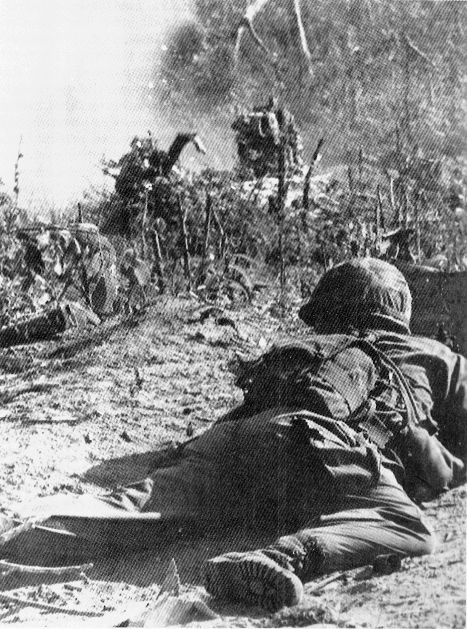
Paratroopers taking fire from Vietcong during Operation Hump (Photo Wikimedia Commons)
On the 8th of November, 1965, within hours of beginning their move towards Hill 65, a key objective, 1st Battalion’s C Company was ambushed by a massive force of Vietcong dug in on the side of the hill. Taking heavy fire from Vietcong fighters, B Company began making its way towards C Company with the hope of relieving the Soldiers. The fighting was so close at times that B Company infantrymen often found themselves fixing their bayonets to deal with surprise attacks.
Throughout the battle, B Company called in a number of highly successful artillery strikes that forced away the Vietcong fighters temporarily. Instead of retreating, the Vietcong commander ordered his troops to outflank the American Soldiers, which was in the process of recovering its fallen and preparing itself for a prolonged battle. By doing this, he theorized that the American units would be unable to call in more artillery strikes, giving the Vietcong an advantage.
However, even in the midst of the fierce battle with soldiers having to engage in hand-to-hand combat at times, the men of the 503rd held their ground and successfully repelled the Vietcong- eventually taking Hill 65. A full evacuation took place the following morning, on the 9th. Even with the American victory, the battle still took its toll on the 503rd, with 49 Soldiers killed in action, and even more wounded. The Australian/New Zealander detachment also sustained two fatal casualties of its own. Overall, Operation HUMP proved to be one of the deadliest days in the 173rd’s long and storied history.
The Story Of Specialist Fifth Class Lawrence Joel
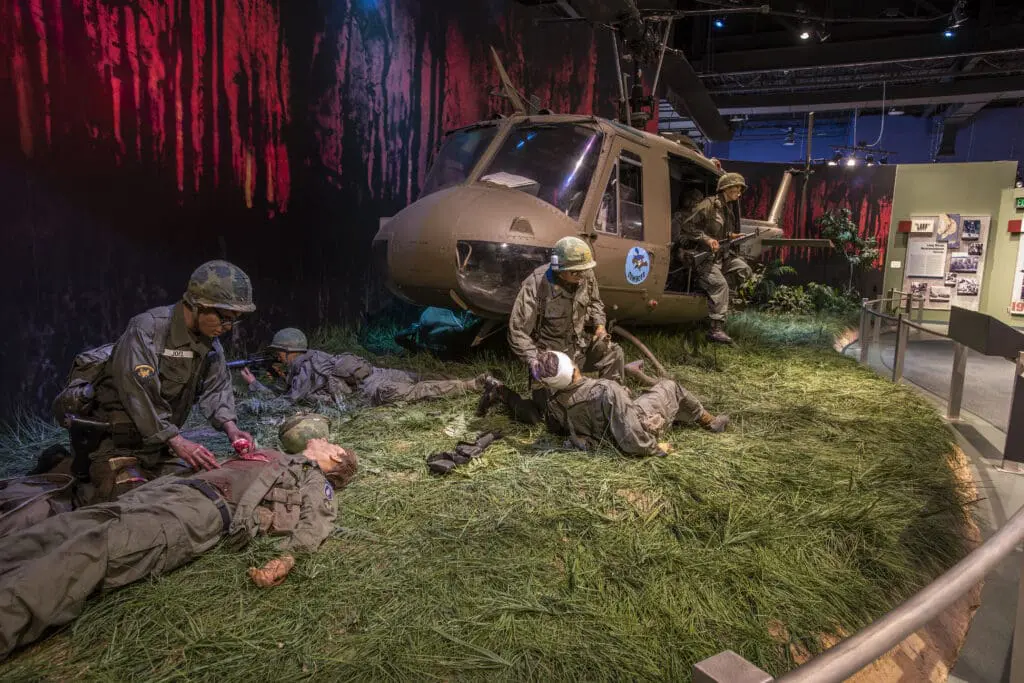
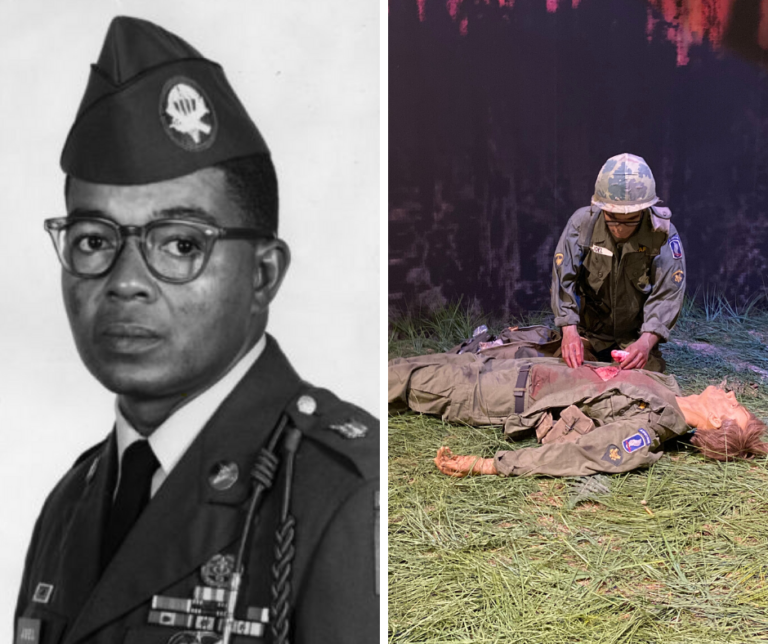
Winston-Salem native, Specialist Fifth Class Lawrence Joel of the 1st Battalion (Airborne), 503d Infantry, 173d Airborne Brigade, fought during Operation HUMP. Despite being shot in the leg, Joel continued to treat his fellow Paratroopers and search for the wounded. After being hit in the thigh by a second bullet, Joel maneuvered himself through heavy enemy fire to treat 13 additional soldiers. Throughout the 24 hour battle, Joel continued to comfort and treat the wounded until he was evacuated. On March 9, 1967 President Lyndon B. Johnson awarded Joel the Congressional Medal of Honor on the White House lawn. Johnson stated that Joel exhibited “a very special kind of courage- the unarmed heroism of compassion and service to others.” He was the first medic to earn the Medal of Honor during the Vietnam War, and the first living African American to receive this medal since the Spanish–American War in 1898. As a tribute to his lasting legacy, his hometown of Winston-Salem named a coliseum after him known as the Lawrence Joel Veterans Memorial Coliseum. Pictured below is an image of Specialist Fifth Class Lawrence Joel, alongside a picture of an exhibit showcased at the U.S. Army Airborne & Special Operations Museum depicting Joel’s heroic actions.
Did you enjoy this content?
If so, please consider giving a donation to the U.S. Army Airborne and Special Operations Museum so we can continue educating the public regarding the histories of Airborne and Special Operations Soldiers.