
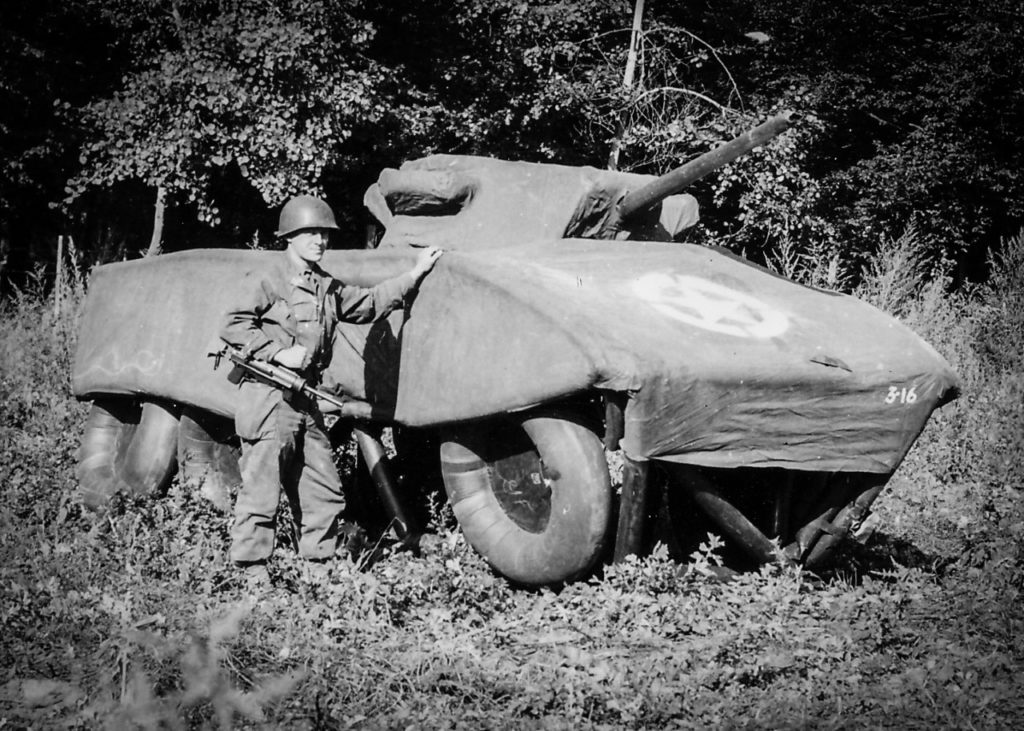
The Ghost Army.
A secret worth remembering.
Inflatable armor. Phantom formations. A real battlefield mission. Meet the Soldiers who turned deception into a weapon.
An army the enemy could see. A force that wasn’t there.
In 1944, the Soldiers of the 23d Headquarters Special Troops arrived in the European Theater with a mission unlike any other. Their deception operations in France began in June 1944. From Normandy to the Rhine, they created the appearance of American forces where none existed, misleading German commanders about Allied strength, locations, and intentions.
Known as the Ghost Army, the 23d Headquarters Special Troops numbered roughly 1,100 men. Its ranks included artists, engineers, radio operators, and other technical specialists. The unit used visual, sonic, and radio deception to simulate larger formations or misdirection, giving actual U.S. units time and space to maneuver. Their success depended on making every detail believable.
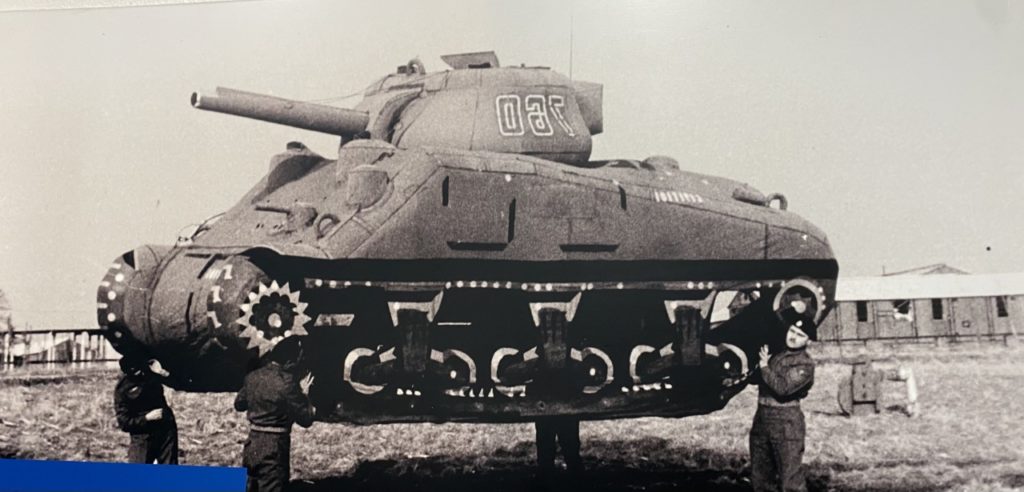
Make them look. Make them listen. Make them believe.
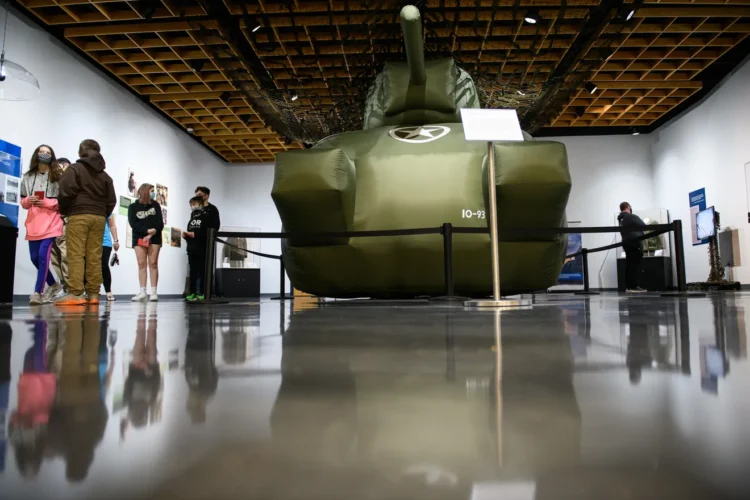
Visual deception gave the enemy something to set their eyes on, like inflatable tanks, make-believe artillery, aircraft, and other vehicles, combined with camouflage and carefully staged activity. Together, these techniques turned a carefully choreographed illusion into a convincing military presence.
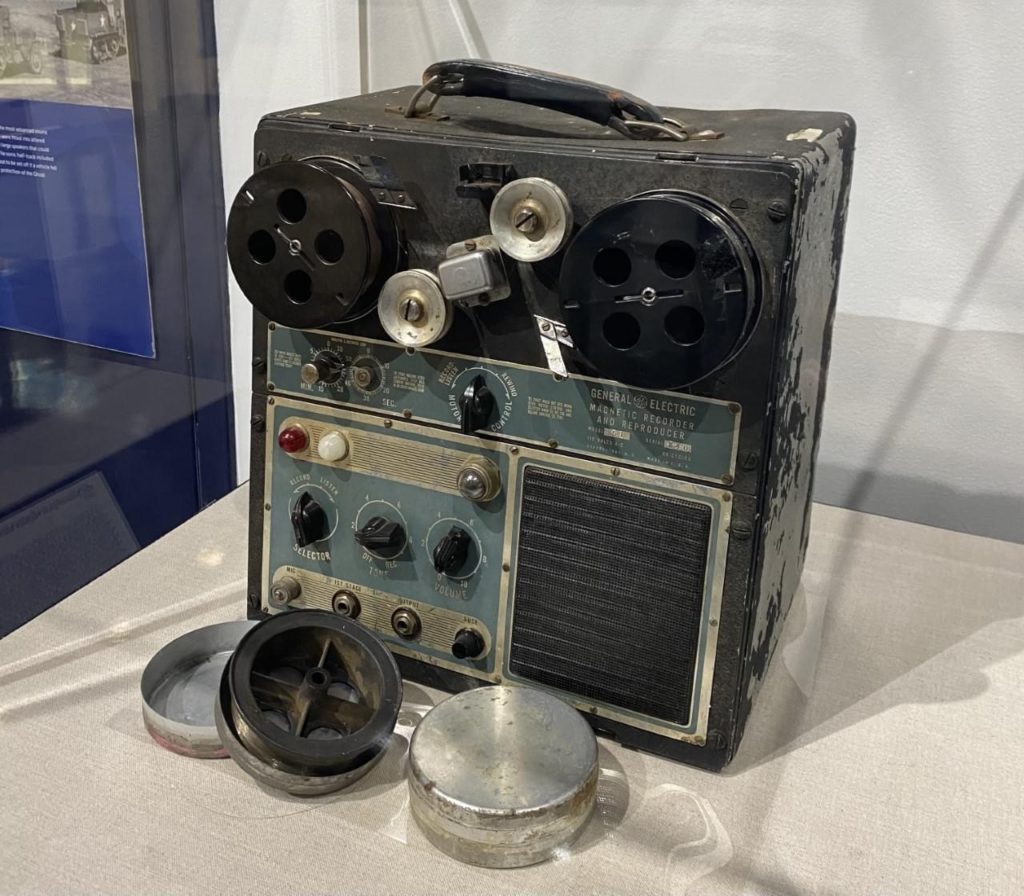
The 3132d Signal Service Company, the 23d’s sonic-deception element, projected recorded sounds of tanks, trucks, artillery, small arms fire, troop movement, and construction. The Signal Company, Special, added false radio traffic. Together, these techniques created the signatures German forces expected from real formations.
The 23d often operated on or near the front lines. Three Soldiers of the 23d Headquarters Special Troops were killed and dozens more were wounded during the unit’s World War II service.
The 3133d Signal Service Company conducted a separate sonic-deception mission in Italy in 1945. During Operation CRAFTSMAN in April 1945, supporting Operation SECOND WIND, the company worked with British inflatable-decoy specialists to use sonic deception to misrepresent Allied troop locations along the Gothic Line.
The machinery behind the illusion.
In 2021, the U.S. Army Airborne and Special Operations Museum hosted a temporary Ghost Army exhibit. Among the artifacts displayed was a wire recording and playback machine that recorded sounds onto steel wire. The 3132d Signal Service Company used this type of equipment to project battlefield sounds toward German lines, helping disguise the locations and intentions of real U.S. Army units and draw enemy attention elsewhere.
Even the units could be invented.
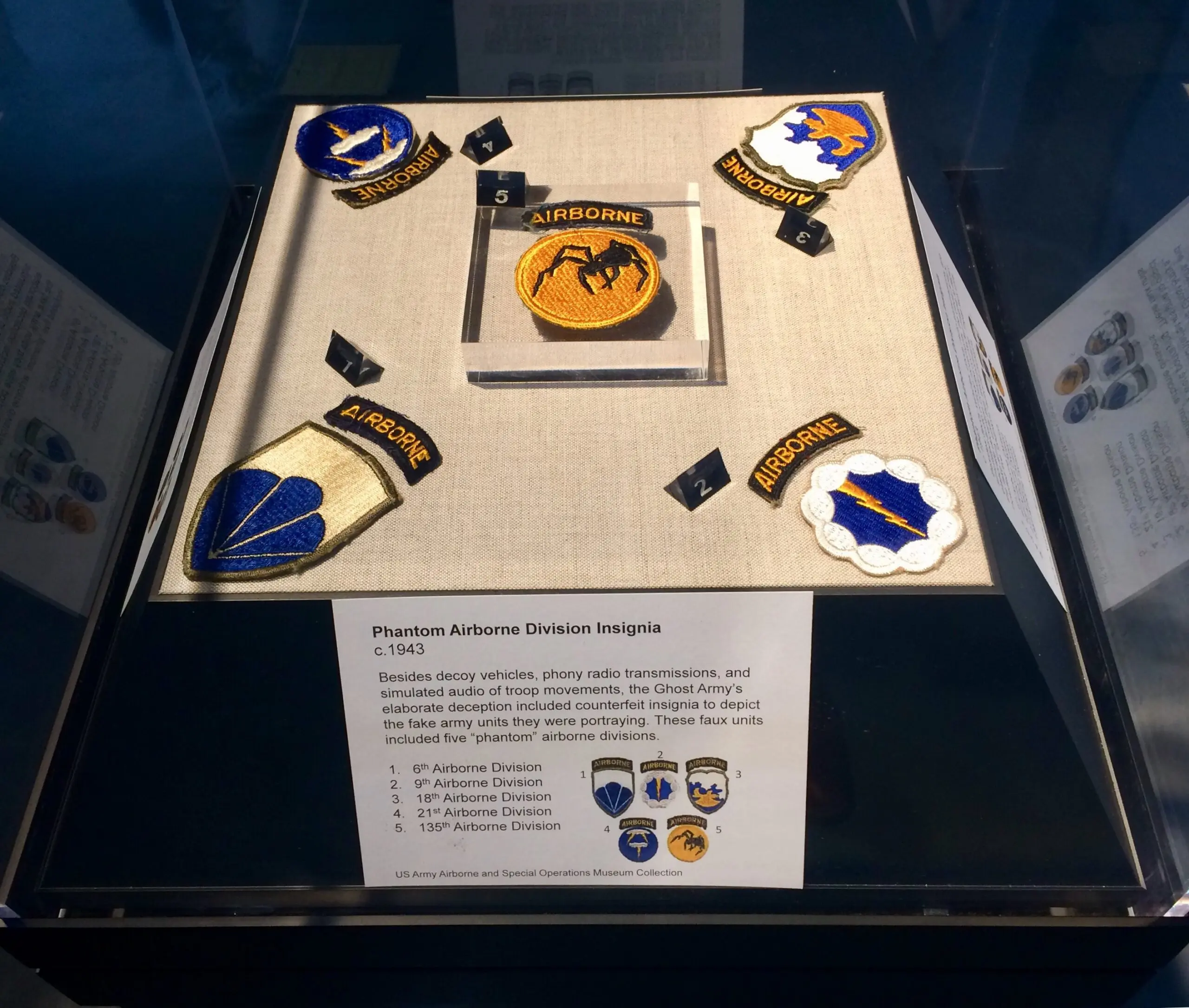
Deception could also extend to unit identity. The 2021 Ghost Army exhibition included a c.1943 display of “Phantom Airborne Division Insignia,” faux shoulder sleeve insignia representing fictional 6th, 9th, 18th, 21st, and 135th Airborne Divisions. The designs used distinctive imagery, including spider, lightning-bolt, and parachute designs, to give imaginary units credible visual identities if spotted by enemy agents. These patches show the broader use of fabricated unit identities in Allied deception.
From a secret mission to the Congressional Gold Medal.
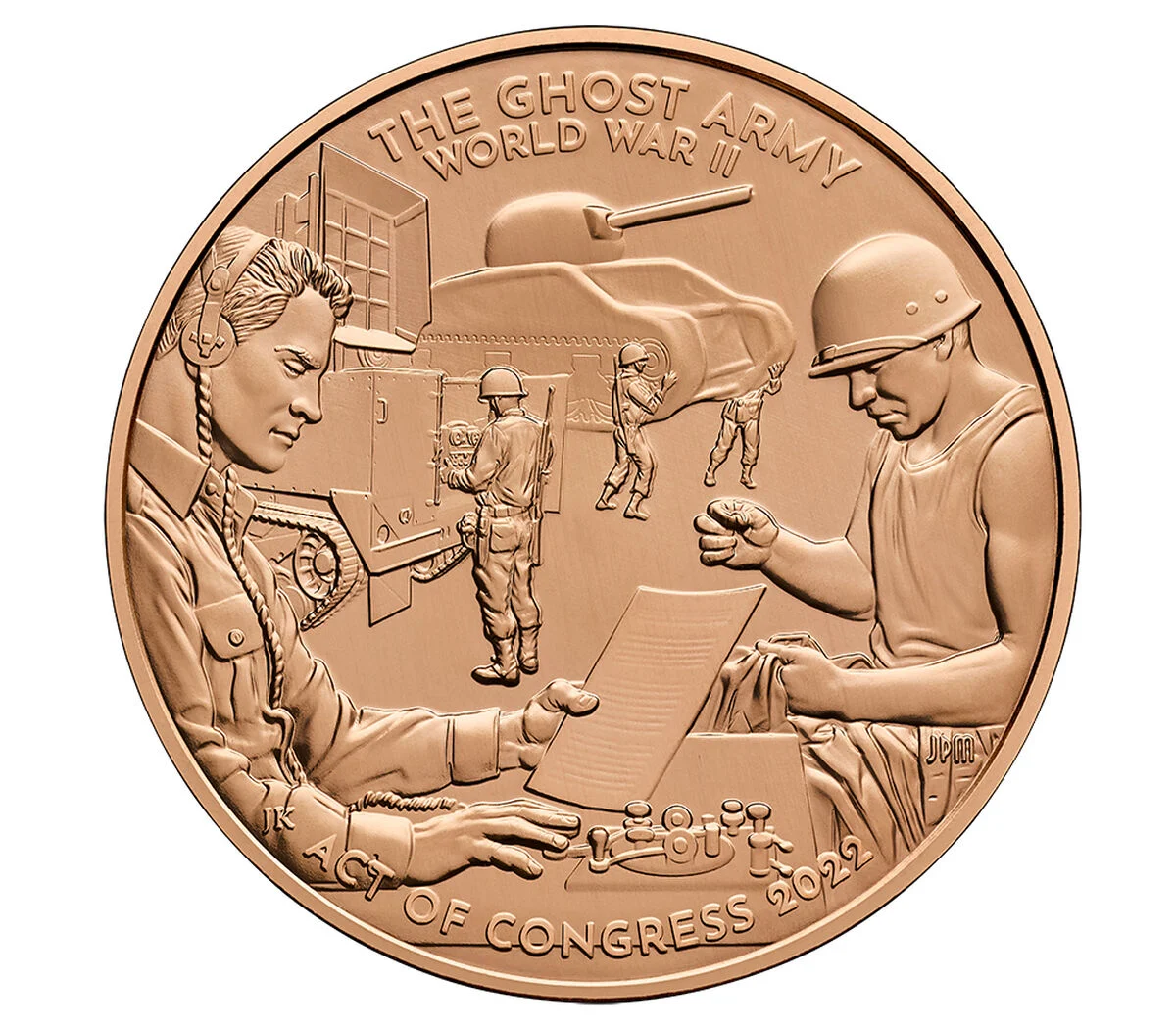
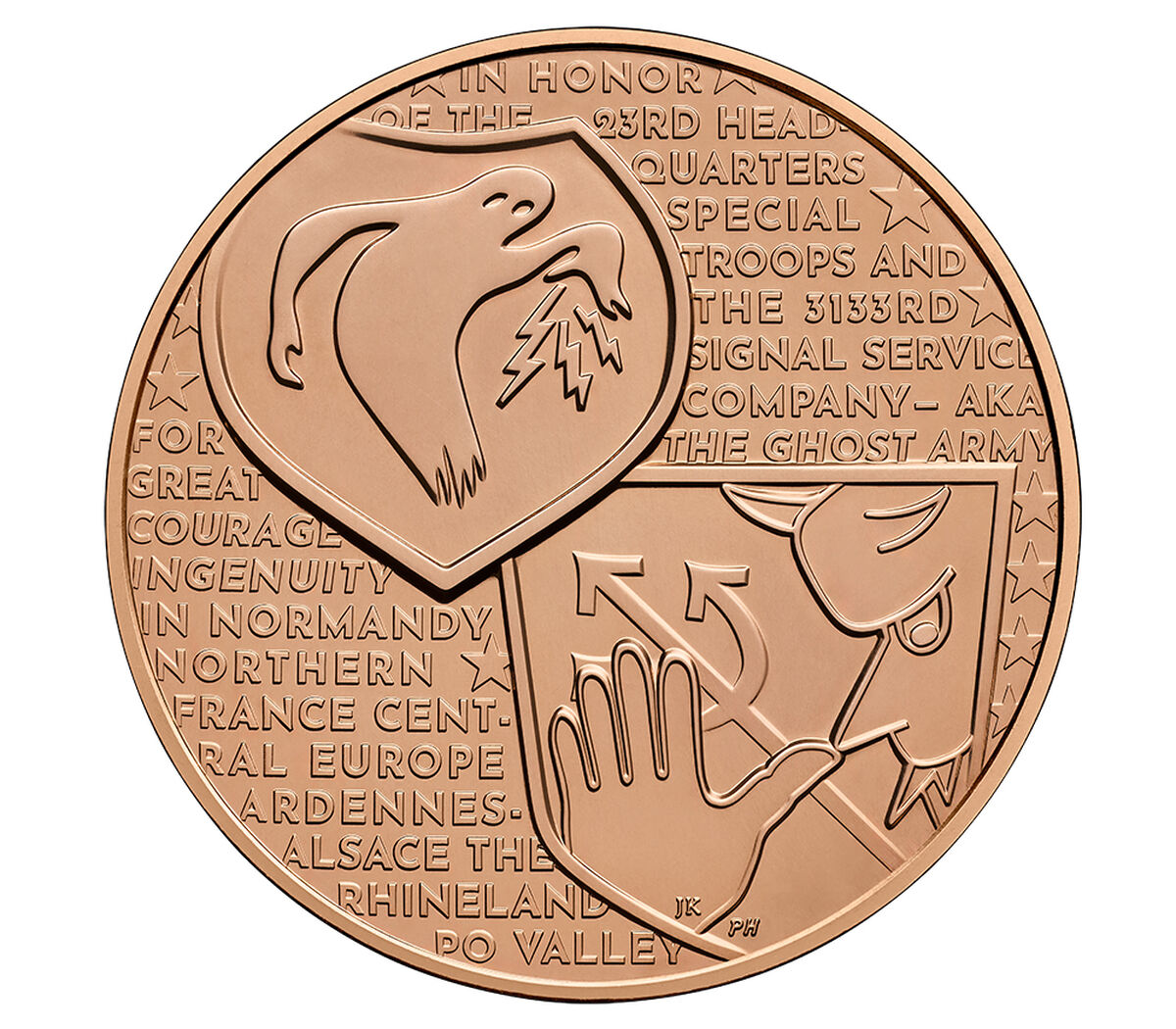
President Joe Biden signed the Ghost Army Congressional Gold Medal Act into law on 1 February 2022. On 21 March 2024, Congress presented the Congressional Gold Medal collectively to the 23d Headquarters Special Troops and the 3133d Signal Service Company during a ceremony in Emancipation Hall at the U.S. Capitol.
Three of the seven known surviving Ghost Army members attended: Bernard Bluestein, John Christman, and Seymour Nussenbaum. Congressional and Army leaders participated in the ceremony, which recognized the units’ distinctive World War II service.
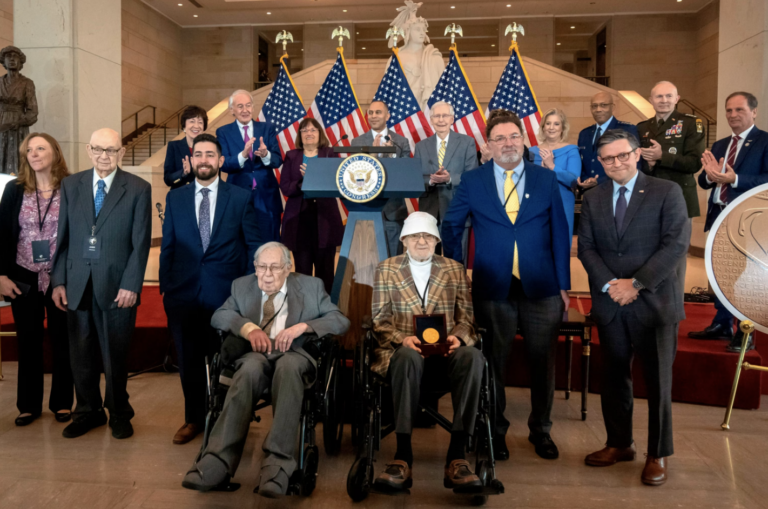
The recognition followed years of work by veterans’ families and advocates, including the Ghost Army Legacy Project.
Shop the Ghost Army collection.
Honor an extraordinary legacy with Ghost Army merchandise from the Museum Store. Explore apparel, hats, patches, challenge coins, and more.
A portion of all sales helps fund Museum exhibits and programs, keeping the stories of America’s Airborne and Special Operations Soldiers alive for future generations.
Calling all young artists!
Kids ages 1–12 can put their own colorful spin on a WWII Ghost Army patch in our free Ghost Army Coloring Contest. Prizes will be awarded in every age group. Mail or drop off entries at the Museum by October 31, 2026.
Get the Coloring Sheet & Contest Details