
The Battle of the Bulge
On December 17, 1944, General Eisenhower ordered XVIII Airborne Corps to move “without delay” to Belgium to help stop a massive German breakthrough that started the day prior. The 82nd Airborne was directed to hold St. Vith and the 101st Airborne Division headed to Bastogne. The 17th Division was ordered from England to Belgium.
Soon, St. Vith and Bastogne were under heavy attack by German tanks and infantry. By December 22, Bastogne was surrounded. The 101st- used to operating behind enemy lines- held Bastogne until relieved on December 26, 1944. Meanwhile, the 82nd’s equally important battle for St. Vith continued until First Army ordered a withdrawal. Fighting from new lines, the 82nd helped turn back the German assault.
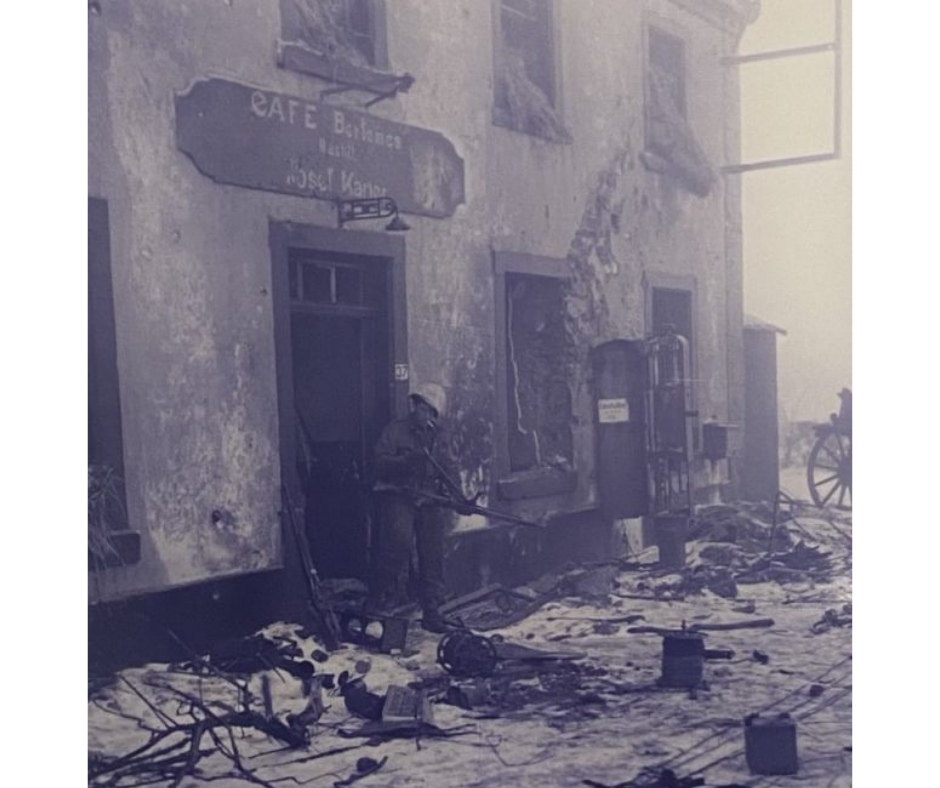
German artillery and aircraft reduced much of Bastogne to ruins. Following the American refusal to surrender, the Luftwaffe launched a four-night bombing mission against military and civilian inhabitants.
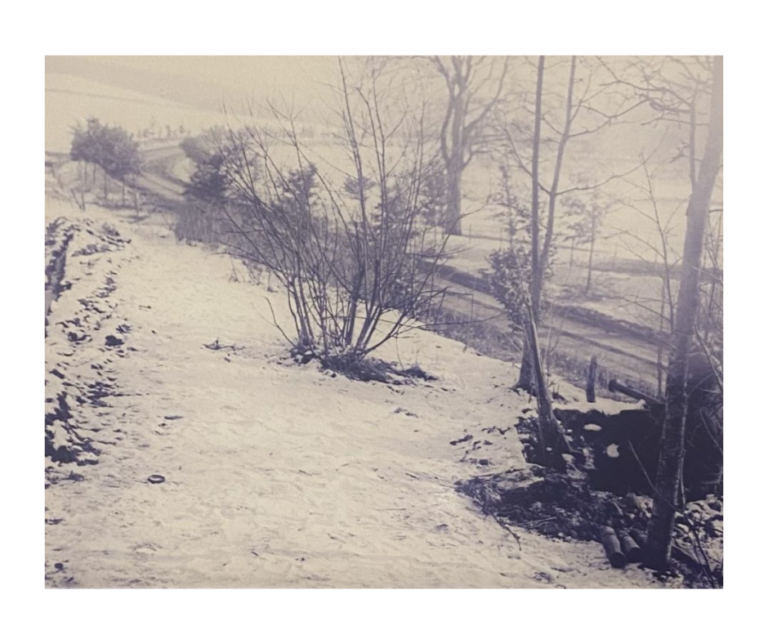
Members of the 101st Airborne Division, armed with bazookas, are on guard for enemy tanks on the road leading to Bastogne.
The 17th Airborne Division arrived just before Christmas. Their first combat was west of Bastogne and the troopers cleared the area of German units.
The Battle of the Bulge was costly for the Airborne. The 509th Parachute Infantry Battalion had only 55 men left and was inactivated. The 551st Parachute Infantry Battalion had 100 men left and was also inactivated. The men of both battalions transferred to units of the 82nd Airborne Division.
NUTS
On December 22, 1944, during the Battle of the Bulge, the German offensive had surrounded the town of Bastogne, Belgium. Inside the town, Brigadier General McAuliffe commanded the 101st Airborne Division and other tank and artillery units.
That morning, a German contingent approached the 101st under a flag of truce, and handed a surrender ultimatum to Major Alvin Jones, commander of the 2nd Battalion, 327th Glider Infantry Regiment. “The fortune of war is changing,” the typewritten note declared, “Battalions are ready to annihilate the U.S.A. troops in and near Bastogne.” The Germans demanded a surrender within two hours times, or shelling would begin. The Americans, the note said, would be responsible for civilian casualties.
When Jones brought the note to McAuliffe, the general asked him what it said. “They want us to surrender,” said Jones. McAuliffe found the suggestion tactically and morally ludicrous, and he began laughing and exclaimed, “Aw nuts!”
Shortly, McAuliffe took up his pencil and prepared to draft a reply. After a few minutes, the general said aloud, “I don’t know what to tell them.” When McAuliffe asked for suggestions, Lt. Colonel Kinnard, his G-3, replied, “Well, sir, that first remark of yours would be hard to beat.” The entire staff spontaneously applauded. Shortly McAuliffe put his pencil to paper.
To the German Commander:
Nuts!
The American Commander
This was the entire content of the note delivered to the Germans by Colonel Joseph H. Harper, commander of 327th Glider Infantry. In this scene displayed at the ASOM, the German officer is studying the note. A few moments later, Harper took pains to make certain the note was clear. “If you don’t understand what ‘nuts’ means, in plain English, it is the same as, ‘Go to Hell.’”
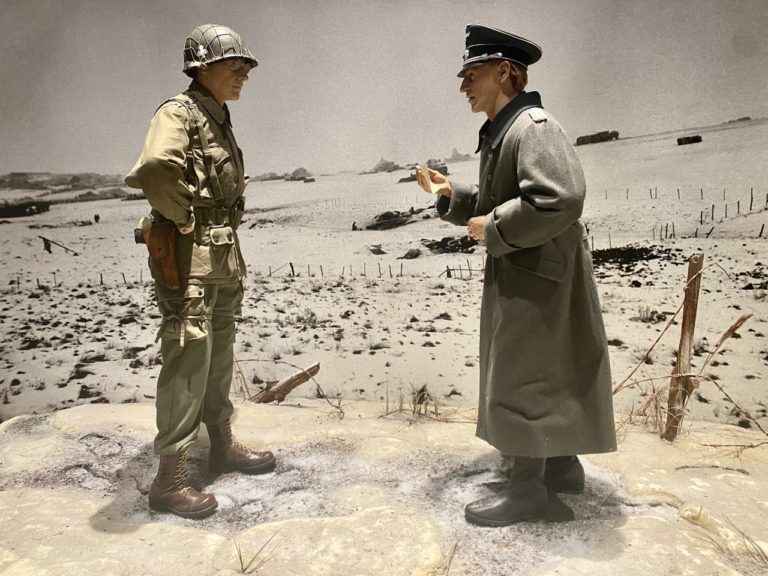
Battle of the Bulge Display at the ASOM
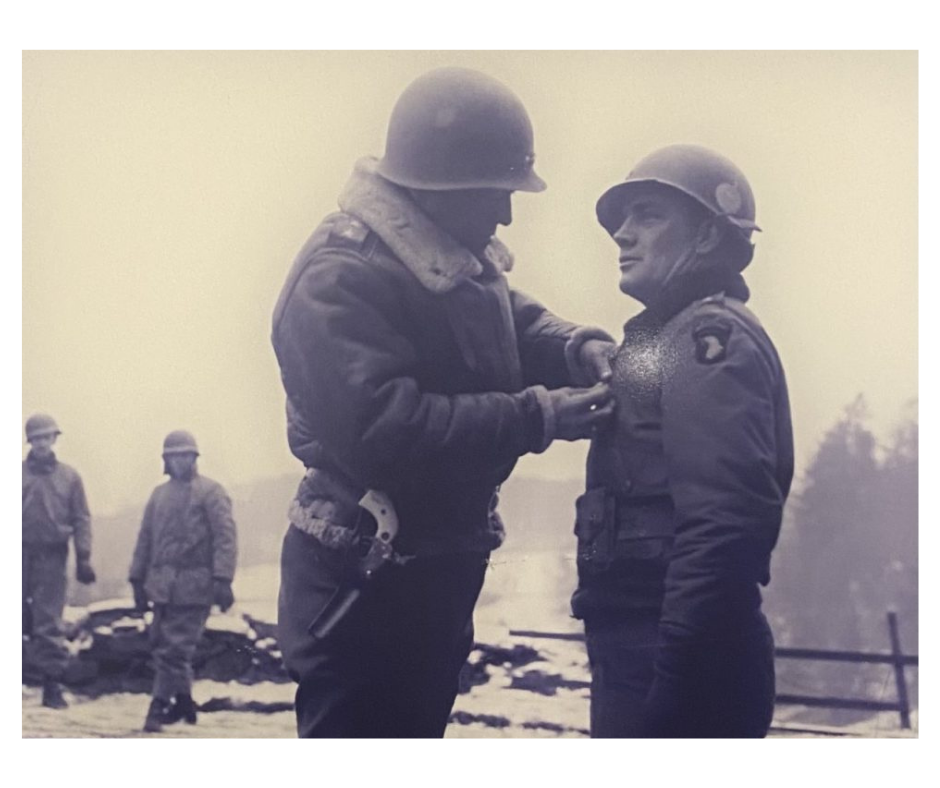
Lieutenant General George Patton, commanding General, Third Army, decorates Brigadier General Anthony McAuliffe with the Distinguished Service Cross.
That night, the German Luftwaffe began a four-night bombing assault against the town. But the Americans refused to give in. On December 26, after a ten-day siege, American tanks from Lieutenant General George Patton’s Third Army lifted the siege of Bastogne.
A Ghost Army Connection
As General George Patton set out to relieve Bastogne during the Battle of the Bulge in December 1944, he received vital assistance from a top-secret deception unit; the 23rd Headquarters Special Troops (AKA The Ghost Army). This handpicked group of Soldiers used inflatable tanks, sound effects, radio trickery and other forms of illusion to fool the Germans about the strength and location of American units. From Normandy to the Rhine, they carried out 22 different battlefield deceptions, working with Patton at several key junctures.
Activated on January 20, 1944, the unique and top-secret Ghost Army unit was comprised of 82 officers and 1,023 men. Under the command of Army veteran Colonel Harry L. Reeder, the group was capable of simulating two whole divisions (approximately 30,000 men) by using visual, sonic and radio deception to fool German forces during the final year of World War II.
“The Ghost Army staged 22 deception operations in France, Belgium, Luxembourg and Germany, often operating dangerously close to the front lines. ‘Its complement was more theatrical than military,’ noted the unit’s official history. ‘It was like a traveling road show that went up and down the front lines impersonating the real fighting outfits.’ They frequently put themselves in danger, suffering casualties as a consequence. Three Ghost Army soldiers were killed and dozens wounded carrying out their missions. As the Allies moved inland through Normandy, as Patton broke out of the hedgerows and raced across France, as General Bradley ordered the relief of Bastogne during the Battle of the Bulge, the Ghost Army was there, playing an unsung role.”Rick Beyer, Writer and Producer of the documentary, “The Ghost Army”
The Ghost Army exhibit that featured a life-sized inflatable tank was previously on display at the ASOM, December 15, 2020 through April 25, 2021.
If you enjoyed this content
Please consider giving a gift to the ASOM to help us continue our mission of educating the public on the legacies of Airborne and Special Operations Soldiers.
Three Interesting Facts About the 82nd Airborne Division
The Army’s 82nd Airborne Division is based out of Fort Bragg, North Carolina and is an elite division specializing in joint forcible entry operations. The division was constituted, originally as the 82nd Division, in the National Army on August 5, 1917, shortly after the American entry into World War I. It was organized on August 25, 1917, at Camp Gordon, Georgia.
With the exception of the Korean Conflict, the 82nd Airborne Division has participated in every major U.S. military campaign since World War I. It was during World War II, on the battlefields of Europe, that the Division secured its place in American history. More recently, the 82nd has deployed several times to Afghanistan and Iraq in the fight against Islamic extremism in the Global War on Terror.
Here are three interesting facts about this unique division:
1. How The 82nd Got Its Nickname
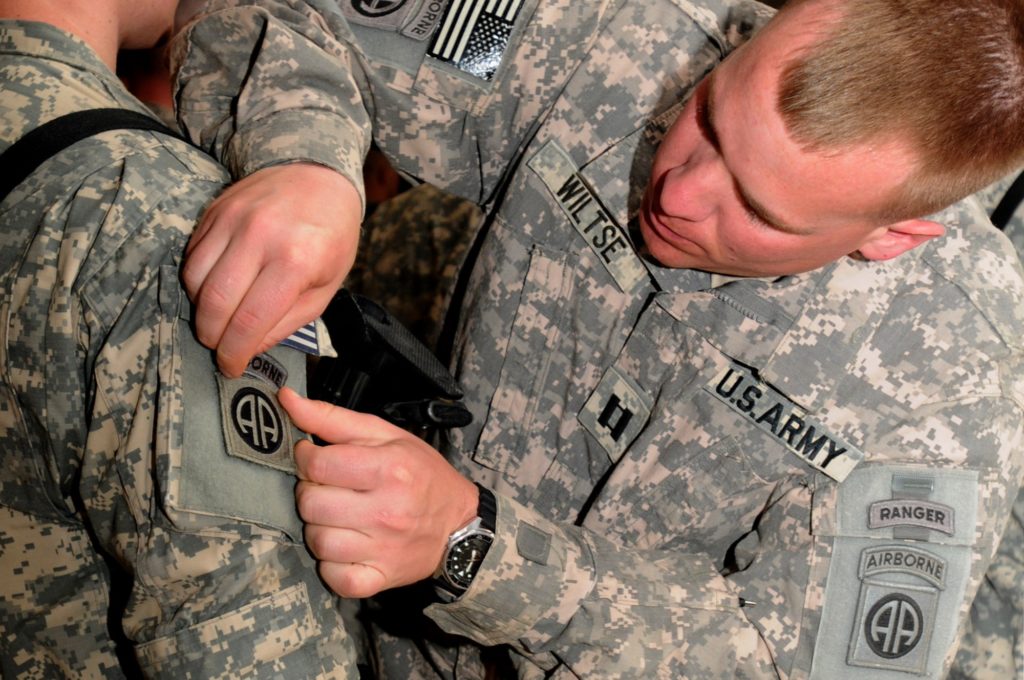
When the United States entered World War I on 6 April 1917, it looked like the adventure of a lifetime for many of America’s young men, including those of the 82nd Division. The Soldiers of the 82nd came from factories, farms, coal mines, offices, and universities throughout the then forty-eight United States to answer the rallying cry from across the Atlantic to join in the fight to make the world “safe for democracy.”
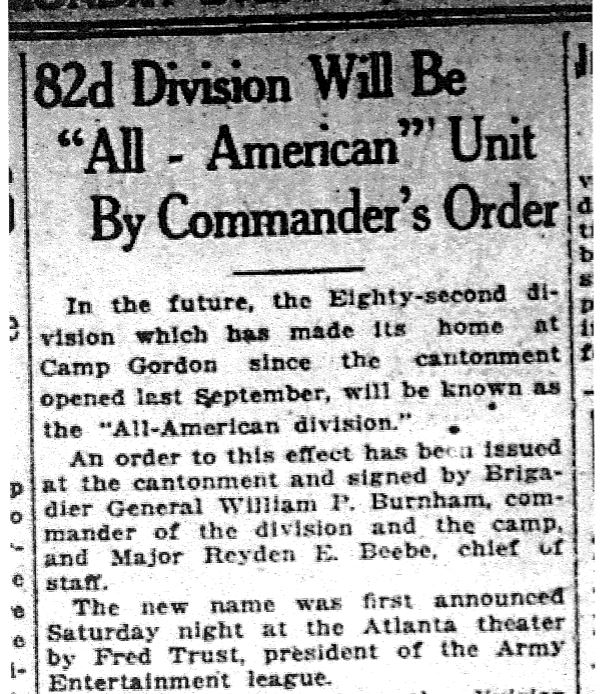
As new units were forming, they decided upon nicknames to help build esprit-de-corps and to forge bonds between the Soldiers. Brigadier General (BG) W. P. Burnham of the 82d held a competition in conjunction with the Soldiers of the Division, the citizens of Atlanta, and The Atlanta Georgian newspaper, to provide a suitable nickname for his diverse unit. It was determined that Georgia Governor, Hugh Dorsey, BG Burnham, and Major R.E. Beebe would be the judges.
After thousands of submissions, Mrs. Vivienne Goodwyn’s, “The All American” Division was selected. The nickname was fitting, for the 82d was made up by men from each of the 48 states. Vivienne felt like the Soldiers of the 82nd represented the best attributes and values of America. To pay tribute to their nickname, 82d Soldiers began sewing the now familiar blue circle that sat in the middle of their red square shoulder patch, with the double “AA” for “All American.”
2. The 82nd Liberated Liberated Wöbbelin, A Concentration Camp
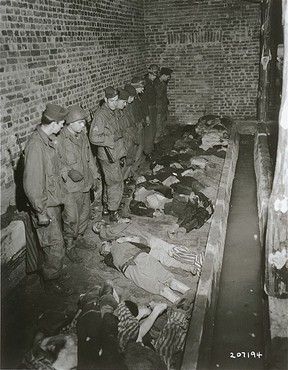
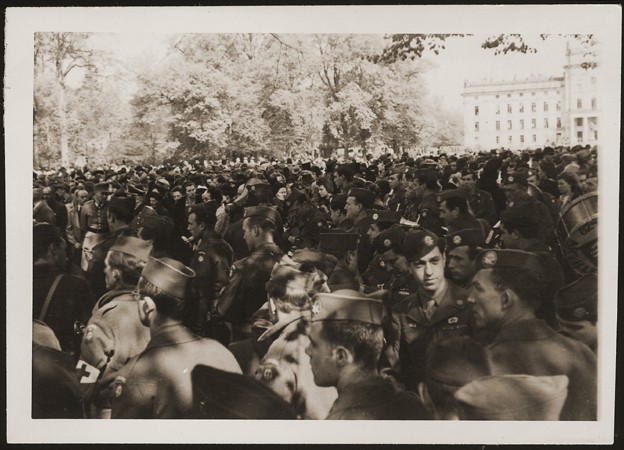
On May 2, 1945, the 82nd Airborne Division liberated Wöbbelin, a subcamp of the Neuengamme concentration camp. During the peak of the war, Wöbbelin held approximately 5,000 inmates, many of whom were suffering from starvation and disease. Living conditions in the camp when the 8th Infantry and the 82nd arrived were terrible; Soldiers found around 1,000 inmates dead in the camp. In the aftermath, the U.S. Army ordered the townspeople in Ludwigslust to visit the camp and bury the dead.
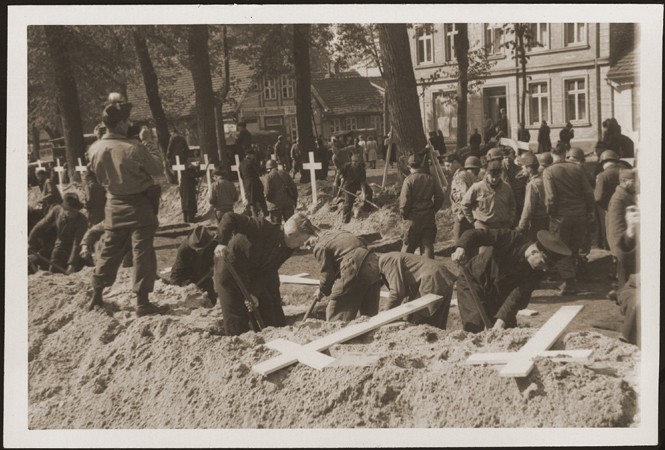
In accordance with a policy mandated by General Dwight D. Eisenhower, the US Army in Ludwigslust ordered “all atrocity victims to be buried in a public place.” Crosses were to be placed at the graves of Christians and Stars of David at the graves of Jews, along with a stone monument to memorialize the dead.
On May 7, 1945, the 82nd Airborne Division conducted funeral services for 200 inmates in the town of Ludwigslust. Attending the ceremony were citizens of Ludwigslust, captured German officers, and several hundred members of the airborne division.
3. An 82nd Division Soldier Broke Several Records For Her Bravery
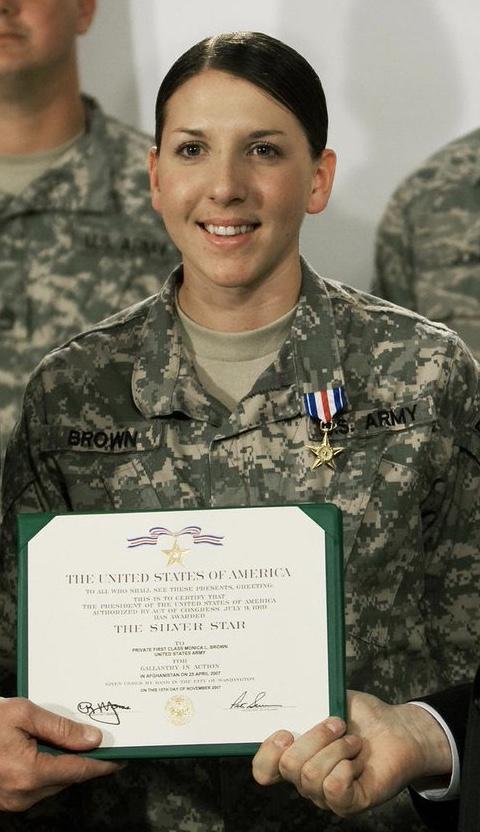
Monica Lin Brown is a United States Army Sergeant and Medic who became the first woman during the War in Afghanistan and only the second woman since World War II to receive the Silver Star, the U.S. military’s third-highest medal for valor in combat. Brown, also the 2008 USO Soldier of the Year, was still in her teens when she received the honor for heroic actions.
Brown, then a Private, deployed to Afghanistan at the age of 18 with the 4th Squadron, 73d Cavalry Regiment, 4th Brigade Combat Team, 82nd Airborne Division. When her convoy came under attack on April 25, 2007, she braved explosions and enemy fire to treat the wounded. One vehicle hit an IED and exploded. Brown moved through small arms fire to the vehicle and began moving the injured away from the wreckage. She treated them only 49 feet from the burning vehicle and used her body to shield them. Her Sergeant, who was providing covering fire, said he saw enemy bullets literally miss Brown by inches.
For her courage, and for protecting the wounded amidst the most dangerous conditions, Brown was awarded the Silver Star in March of 2008.
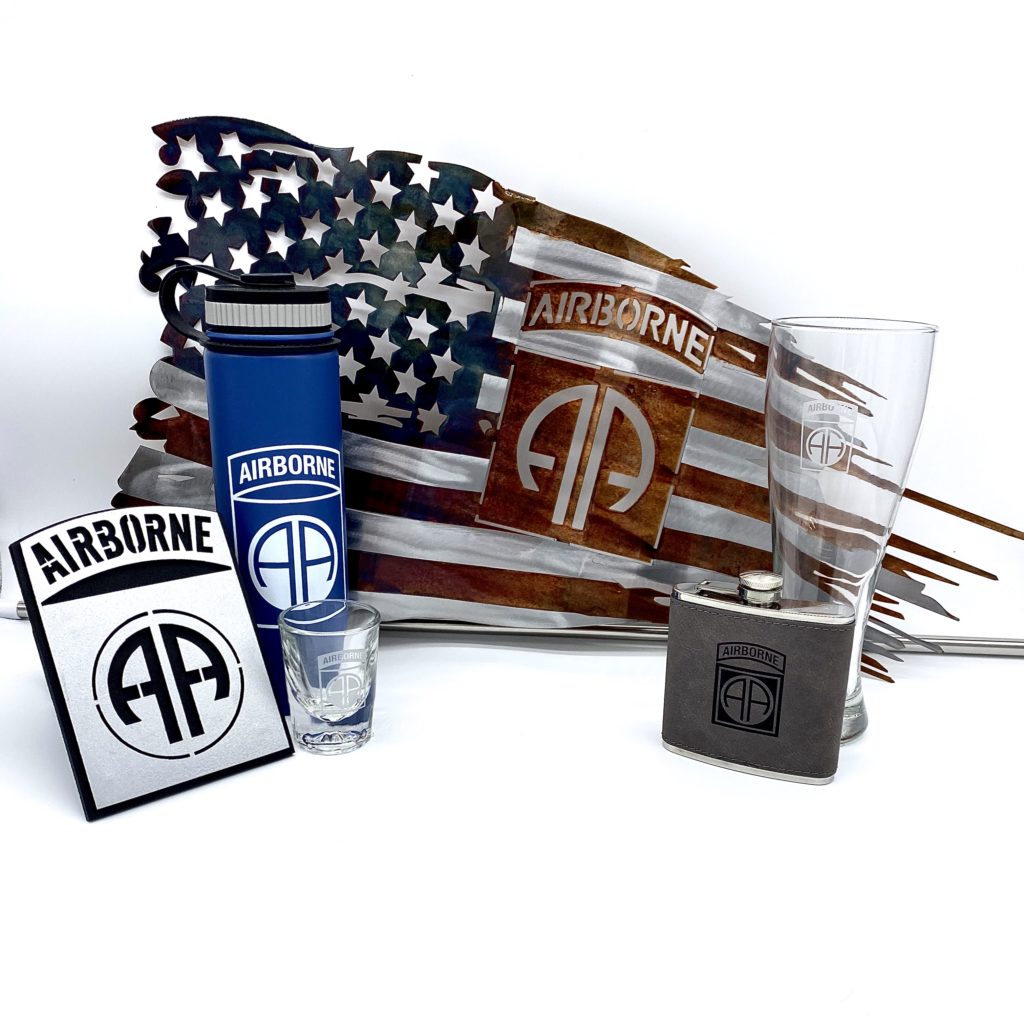
Show support for your favorite 82nd Soldier or Veteran with a gift from our Airborne collection. Click the button to below to start shopping!
ASOMF WARNS OF POTENTIAL SCAMS TARGETING MUSEUM
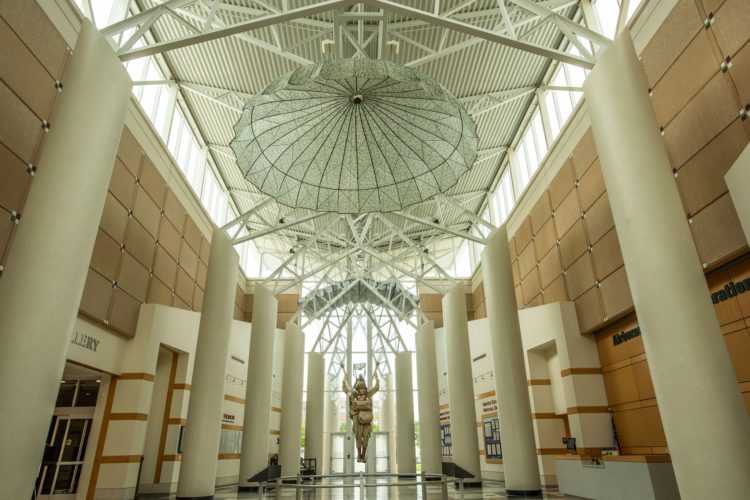
The Airborne and Special Operations Museum Foundation warns the public regarding potential scams targeting the Museum. Anyone who tries to sell tickets to the public for Museum Admission or to the Field of Honor is running a scam. Admission is free of charge.
Additionally, online reservations to tour the Museum are free as well. The public can only make a reservation by visiting picktime.com/ASOMF.
The Museum Foundation is asking the public to report fraudulent tickets via Facebook @ASOMF or email at info@asomf.org.