
A Call To Arms: Help Preserve The ASOM Legacy

Dear Friend of the ASOM Foundation,
The Airborne & Special Operations Museum Foundation has served our community for 24 years, at the side of the U.S. Army proudly preserving the rich history and sacrifices of the American Soldiers who served in Airborne and Special Operations units since World War I. Within these Museum walls, the stories of bravery, innovation, and resilience come alive, inspiring generations, and fostering a deeper appreciation for the men and women who have defended our nation.
However, we face a critical challenge. The ASOM Foundation is experiencing a significant loss of major funding, jeopardizing our ability to continue our vital museum support mission through public programs, educational opportunities, and exhibit support. Without your help, we may be forced to dim the light on crucial chapters in military history past and present.
But there is still hope.
Your generous donation, no matter the size, can make a real difference. Here is how your contribution will help:
- Maintain our world-class exhibits: Your support ensures the artifacts, uniforms, and interactive displays that bring history to life remain accessible for future generations.
- Expand educational programs: We offer educational programs for students of all ages. Your donation helps fund these initiatives, fostering patriotism and a deeper understanding of the sacrifices made for our freedom.
- Honor our Veterans: The museum serves as a sanctuary for Veterans to connect with their past and share their stories. Your contribution ensures they have a place of honor within our walls.
Here is how you can help:
- Donate online: Visit our secure website at www.asomf.org/donate/ to make a quick and easy one time or recurring donation.
- Mail a check: Send your contribution to ASOM Foundation, 100 Bragg Blvd. Fayetteville, NC 28301
- Contribute to our endowments:
Together, we can keep the stories of bravery and sacrifice alive. Please, donate today and ensure the Airborne & Special Operations Museum Foundation continues to be a beacon of support for military history for generations to come.
With heartfelt gratitude,
Renee Lane
Executive Director
Airborne & Special Operations Museum Foundation
The Ghost Army Awarded Congressional Gold Medal
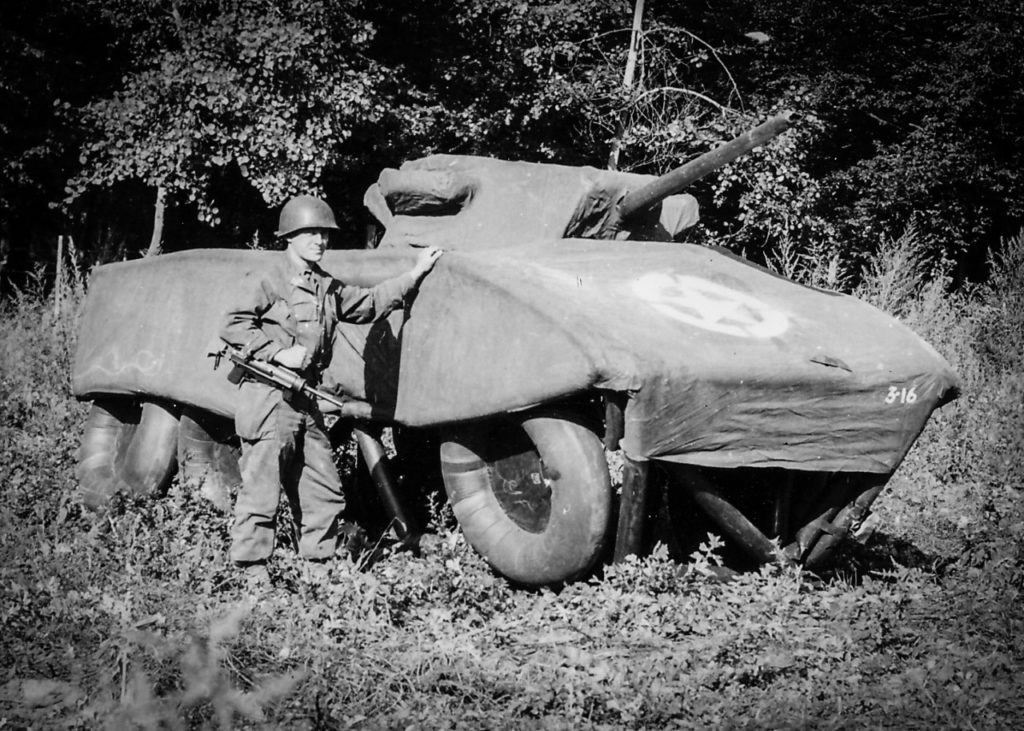
Activated on January 20, 1944, the unique and top-secret “Ghost Army” unit was comprised of 82 officers and 1,023 men. Under the command of Army veteran Colonel Harry L. Reeder, the group was capable of simulating two whole divisions (approximately 30,000 men) by using visual, sonic and radio deception to fool German forces during the final year of World War II. Armed with nothing heavier than .50 caliber machine guns, the 23rd took part in 22 large-scale deceptions in Europe from Normandy to the Rhine River, the bulk of the unit arriving in England in May 1944, shortly before D-Day.
The Ghost Army consisted of a carefully selected group of artists, engineers, professional soldiers and draftees, including fashion designer Bill Blass, painter Ellsworth Kelly and photographer Art Kane. Many West Point graduates and former Army Specialized Training Program participants were assigned to the 23rd, and it was said to have one of the highest collective IQs in the Army.
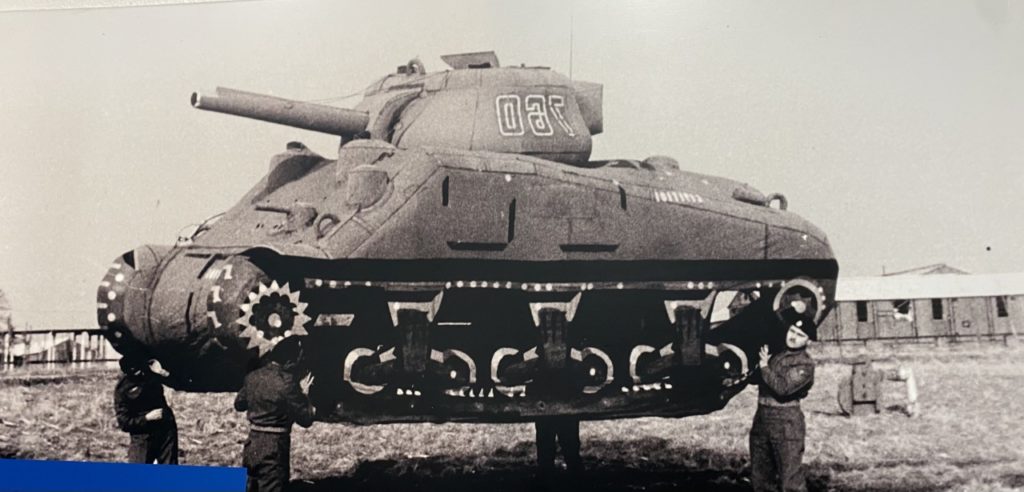
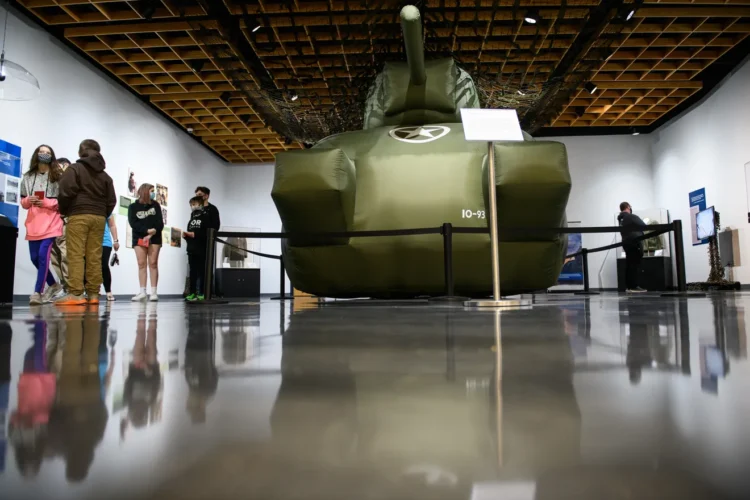
Ghost Army Soldiers lifting an inflatable tank. Built on a frame of inflatable tubes, the facsimiles were surprisingly realistic when viewed from a few hundred yards, from a reconnaissance plane in the air, and especially when combined with camouflage netting or other natural coverage.
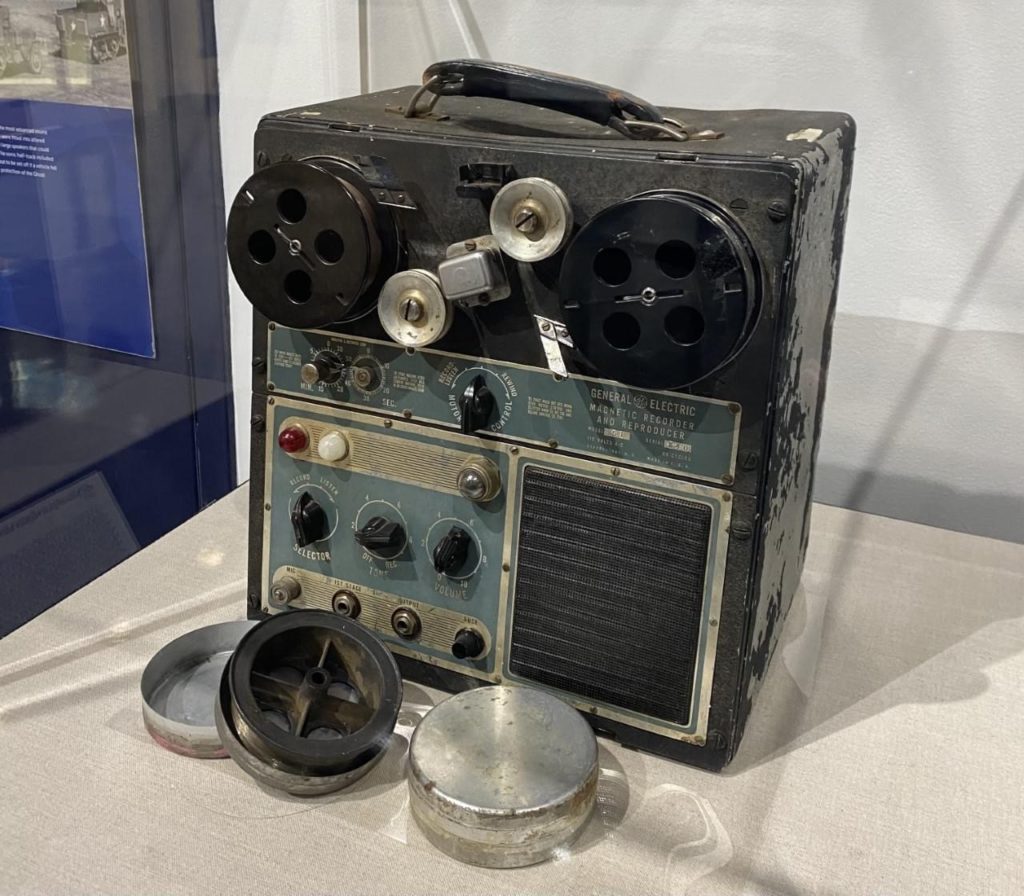
This wire recording and playback machine recorded tank, truck, artillery, and small arms sounds by pulling a 37 gauge steel wire over the recording head that magnetized each point along the wire to reproduce sound. The 3132nd Signal Service Company of the Ghost Army projected these sounds of combat towards the German lines in an attempt to disguise real U.S. Army unit locations and intentions, as well as draw enemy fire to keep them occupied in a certain area of the battlefield. This artifact, on loan from National World War II Museum, was featured in the temporary Ghost Army exhibit at the ASOM in 2021.
The unit waged war with inflatable tanks and vehicles, fake radio traffic, sound effects and even phony generals, using imagination and illusion to trick the enemy while saving thousands of lives. Along with the 3133rd Signal Service Company in Italy, the unit helped liberate Europe from the grip of Nazi tyranny.
On March 21, 2024, three of the seven known surviving members of the Ghost Army attended a ceremony at the Whitehouse where they were awarded the Congressional Gold Medal: Bernard Bluestein, 100, of Hoffman Estates, Illinois; John Christman, 99, of Leesburg, New Jersey; and Seymour Nussenbaum, 100, of Monroe Township, New Jersey.
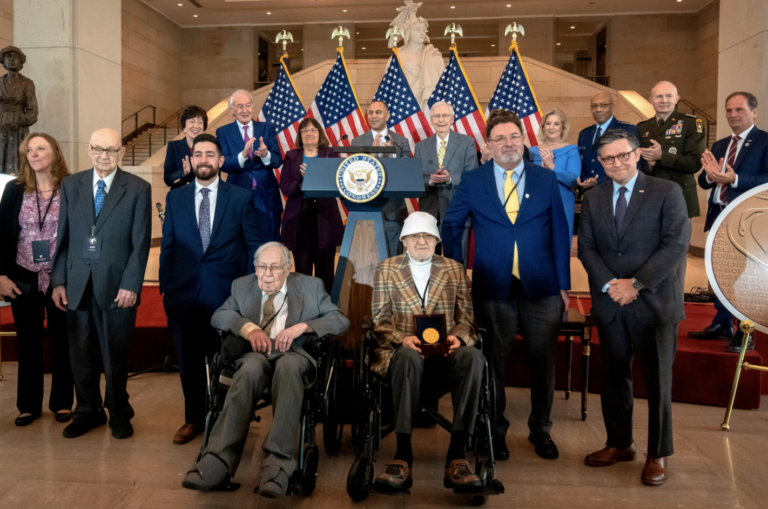
“Their weapons were unconventional but their patriotism was unquestionable,” said.Sen. Edward Markey of Massachusetts during the ceremony.
House Speaker Mike Johnson said during the ceremony that it’s estimated that between 15,000 to 30,000 lives were saved because of the Ghost Army’s work.
The legislation to honor the military units with the Congressional Gold Medal — Congress’ highest honor — was signed into law by President Joe Biden in 2022. That came after almost a decade of work by family members of the soldiers and Rick Beyer, a filmmaker and author who has who helped bring their story to light after their mission was declassified in 1996. Beyer, president of the Ghost Army Legacy Project, produced and directed the 2013 documentary “The Ghost Army” and co-authored the 2015 book “The Ghost Army of World War II.”
A Message From the ASOM Foundation
On August 5th, 2023, the world lost a great American and Soldier, General (Ret) James J. Lindsay.
General Lindsay was an American Soldier and leader known by all to have extraordinary physical bravery and moral courage on the battlefield as well as uncompromising integrity throughout his service. Many don’t realize that he was also one of the driving forces behind the U.S. Army Airborne and Special Operations Museum (ASOM).
While serving at Fort Liberty, then called Fort Bragg, General Lindsay had a vision of a facility to stand as a memorial to the character and values of the men and women of America’s airborne and special operations forces.
In an interview following General Lindsay’s acceptance of Fayetteville’s Hometown Hero Award in 2018, he stated the first meeting to talk about the possibility of a museum focusing on airborne and special operations troops was held during the first week of August 1990. The museum initially was going to be built on post and a groundbreaking event was held but funding unfortunately fell through. Despite this setback, Lindsay did not give up on this dream. With General Lindsay’s guidance, community leaders and the United States Army joined forces to bring his vision to fruition. On August 16, 2000 (National Airborne Day) the museum opened to the public to much fanfare. General Lindsay served as President Emeritus of the Airborne and Special Operations Museum Foundation until his passing.
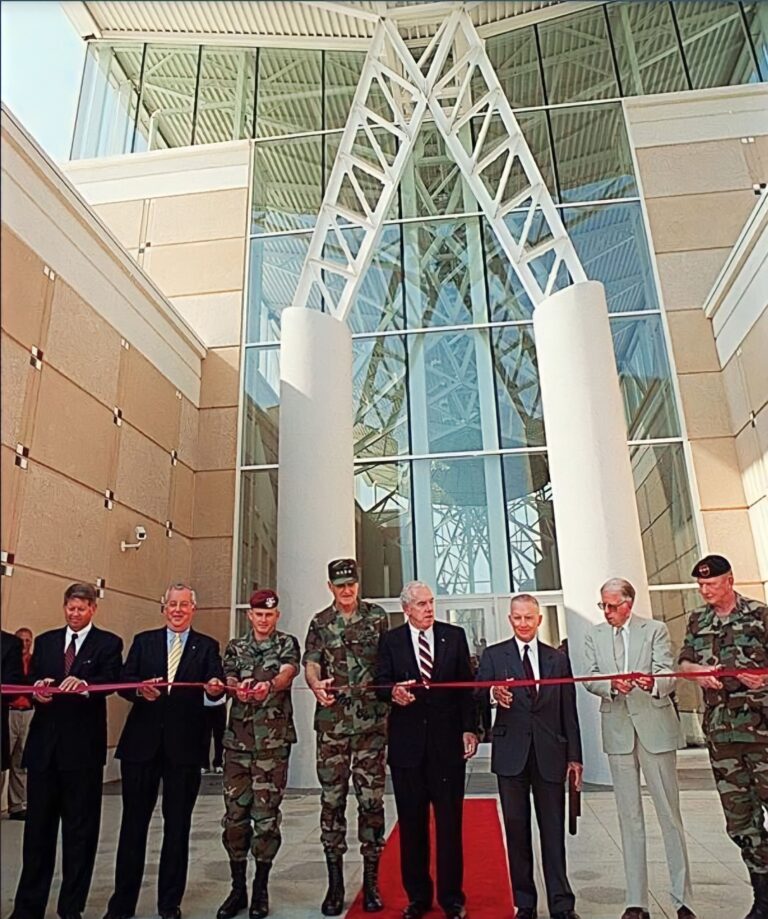
In the photo, General Lindsay, center, and on the left then-Chairman of the Joint Chiefs of Staff General Hugh Shelton and on his right, the late H. Ross Perot. Sr. and other business leaders can be seen cutting the ribbon at the Museum’s grand opening- a dream that took over ten years to come to fruition.
In celebration of the life and leadership of General Lindsay, a Designated Endowment Fund was created through the Cumberland Community Foundation to support the mission and programs of the Airborne and Special Operations Museum Foundation.
To honor his memory and everlasting legacy, please consider an Endowment gift today.
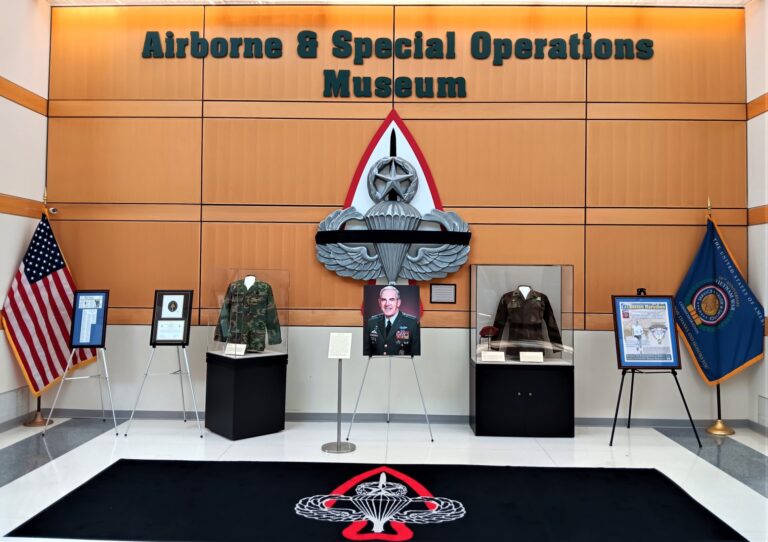
The U.S. Army Airborne and Special Operations Museum’s temporary exhibition highlights the achievements of General James J. Lindsay’s life.
Artifacts in this exhibition include: General Lindsay’s Battle Dress Uniform Coat from when he commanded the 82nd Airborne Division (on loan from the 82d Airborne Division War Memorial Museum), and the Field Coat and Beret he wore as a member of Team 162, “Red Hats”, Military Assistance Command, Vietnam.
This exhibition will be available to the public through Sunday September 28.
7 Facts You Probably Don’t Know About the U.S. Army
Happy 250th Birthday to the U.S. Army 🇺🇸
From the Continental Army to today’s elite warriors, 250 years of courage, sacrifice, and service deserve to be honored.
Did you know that the U.S. Army was established on June 14, 1775, when the Continental Congress authorized the enlistment of expert riflemen to serve the United Colonies? That moment marked the birth of what would become the most powerful fighting force in the world.
Here at the U.S. Army Airborne & Special Operations Museum, we proudly preserve and share the history of the Army’s most elite warriors—from paratroopers who jump into battle to Special Forces soldiers who operate in the shadows. The museum is open today, and there’s no better time to walk through the legacy of those who lead from the front.
Here are 7 incredible facts about the U.S. Army you might not know:
1. The U.S. Army Was the Last Military Branch to Have an Official Song
“The Army Goes Rolling Along” was not always the Army’s official song. In fact, it did not receive that distinction until Veterans Day 1956, after a lot of trial and error.
Its origins are in the Philippines, where West Point graduate Edmund Louis Gruber was stationed in 1908. He found inspiration upon overhearing a section chief shout commands at a caisson driver, and ended up writing “The Caissons Go Rolling Along.”
John Philip Sousa turned it into “The Field Artillery Song.” When the Army failed to find the perfect song during contests held in 1948 and 1952, they returned to the tune with one condition: that the lyrics be reworked. The rest is history!
2. The U.S. Army Would be the Tenth Largest City in the United States.
There are just over one million soldiers currently serving in the U.S. Army. About half of that number is active-duty Soldiers who serve full-time, while the rest make up the reserve components of National Guard and Army Reserve. To put it in perspective, a city filled with all U.S. Army Soldiers would have more people in it than San Jose, California or Austin, Texas.
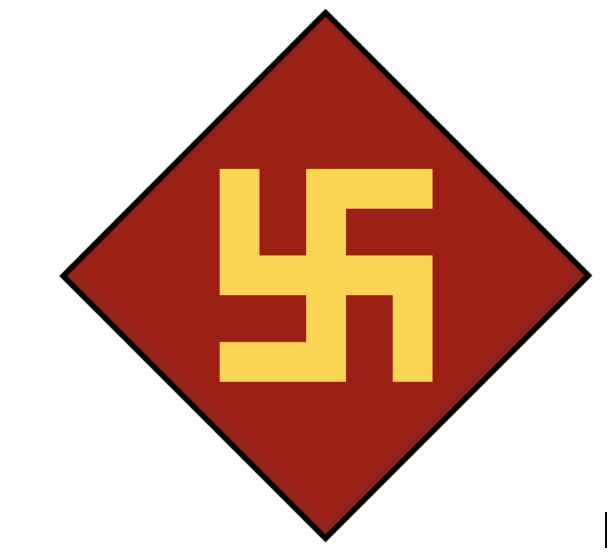
3. Before World War II, 45th Infantry Division Members Wore a Swastika Patch
For the first 15 years of its existence, members of the 45th Infantry Division proudly wore a swastika on their left shoulders because it was an ancient American Indian symbol of good luck. The insignia was a recognition of the many Native Americans soldiers who proudly served in the 45th Infantry Division. The yellow swastika on a square background of red symbolized the Spanish Heritage of the four Southwestern states that made up the membership of the 45th—Oklahoma, New Mexico, Colorado, and Arizona. A similar symbol was adopted by the Nazi party in the late 1920’s, and as the N.S.D.A.P. rose to power in 1933, the symbol became so strongly associated with German National socialism that it had to be abandoned as the insignia of the 45th Infantry Division. It was later changed to a thunderbird.
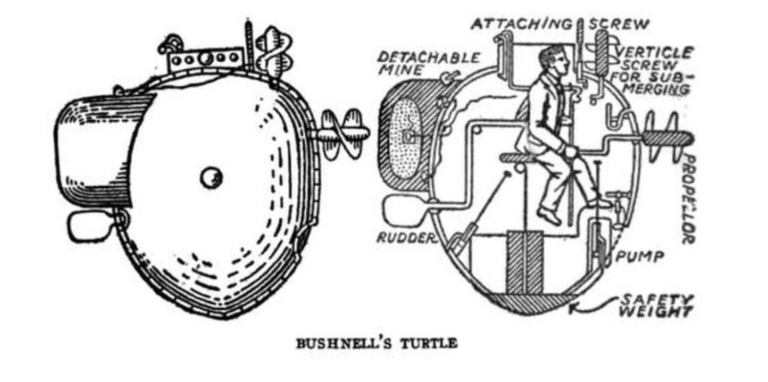
4. The First U.S. Army Submarine Was Used During the Revolutionary War
The first submarine used by the U.S. Army was invented by Yale graduate, David Bushnell. Named the “Turtle,” it was a wooden craft that could be propelled by a single individual using a hand crank and a foot treadle. It rose and sank via a pedal-operated tank and a lead ballast helped keep it upright.
The Turtle saw its first military activity on September 7, 1776, during a mission to blow up the HMS Eagle. The ship was of British origin and had moored in New York Harbor.
Unfortunately, its pilot, Ezra Lee, received little training and aborted the mission. After several other botched trials, the craft was abandoned. Despite this, the Patriot Army, including George Washington, praised Bushnell for his invention.
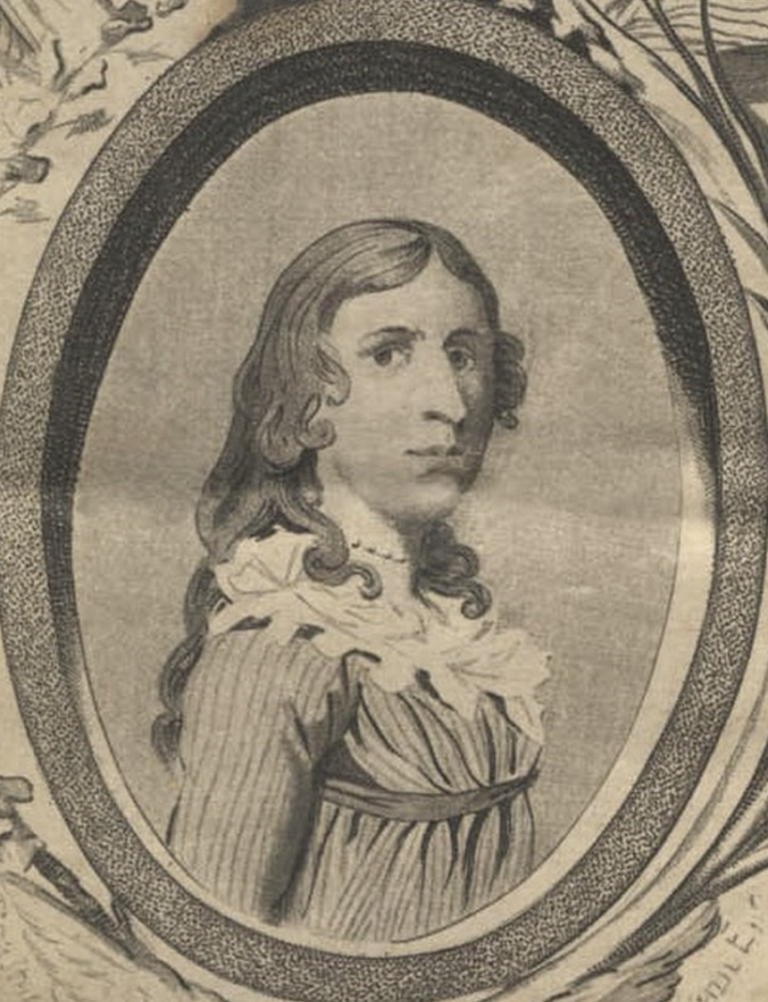
5. The First Possible Female Soldier Disguised Herself as a Man
Deborah Sampson served in the Revolutionary War between 1782 and 1783. She enlisted in the Fourth Massachusetts Regiment under the name “Robert Shurtleff” and was assigned to Captain George Webb’s Company of Light Infantry. There, she fought against the British alongside male infantry soldiers. To keep her identity hidden, Sampson often treated her wounds herself. She managed to keep up the charade for a year before falling ill and being admitted to hospital, where she lost consciousness. She was given an honorable discharge in 1783 and was the first-ever woman to receive a military pension.
6. There Have Only Been Five, Five-Star Generals in the U.S. Army
The rank was introduced in 1944 to allow U.S. officers to better command Allied officers from other countries who were technically of a higher rank. The Navy also introduced a similar rank, the Fleet Admiral. Between 1944 and 1945, the Army promoted Dwight D. Eisenhower, Henry H. Arnold, George C. Marshall, and Douglas MacArthur to the rank, with Omar N. Bradley being the last in 1950. While still in existence, the rank has not been used since Bradley died in 1981. The President still has the power to promote an Army General to the rank with Senate approval.
7. JFK is Behind the Special Forces’ Green Beret
1961, when President Kennedy was preparing to travel to Fort Bragg, North Carolina, he sent word to Brigadier General William Yarborough for all Army Special Forces soldiers to wear their green berets for his visit. In advance of the visit, the U.S. Army officially authorized the beret as part of the Special Forces uniform, and Yarborough greeted the president wearing his own green beret. Kennedy continued his support for the Special Forces in 1962, calling the green beret “a symbol of excellence, a badge of courage, a mark of distinction in the fight for freedom.”
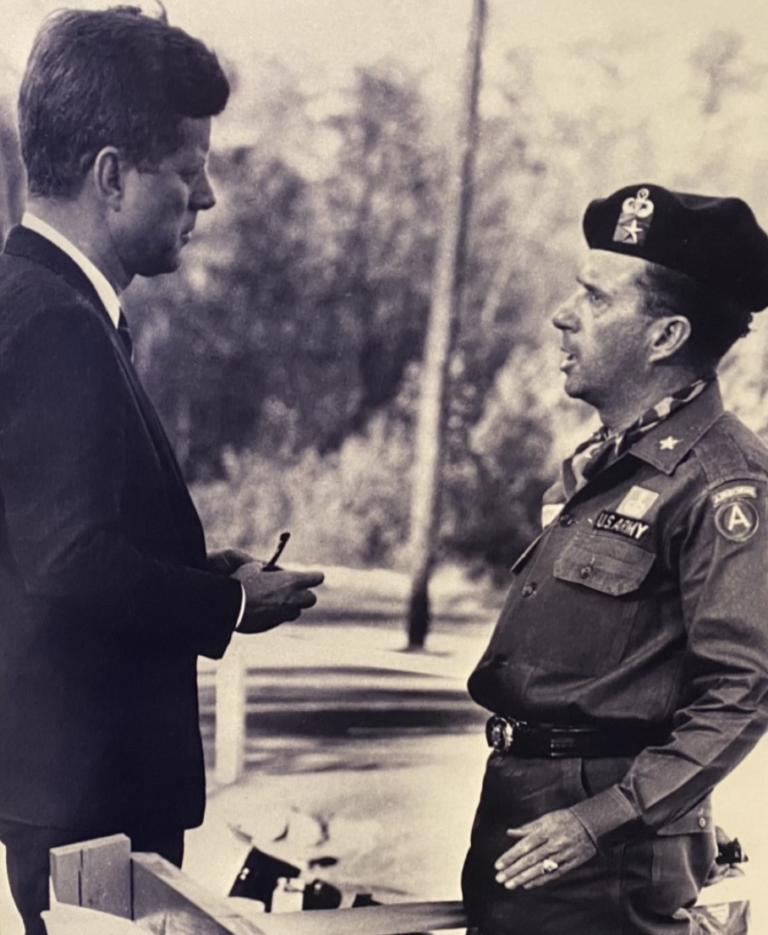
President John F. Kennedy, a major supporter of the Special Forces, talks to Brigadier General William P. Yarborough during combat readiness demonstrations at Fort Bragg, October 1961.
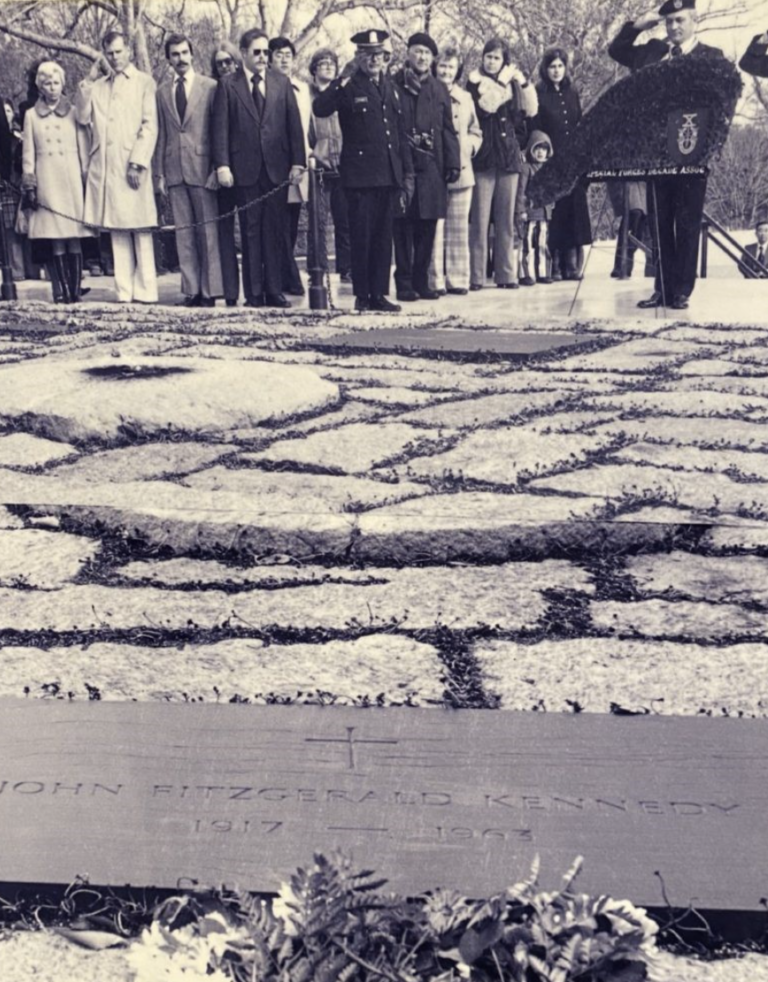
Green Berets pay homage to the slain President Kennedy at his gravesite at Arlington National Cemetery.
Within hours after the president’s untimely passing, Jackie Kennedy requested that Green Berets participate in the Honor Guard for his funeral. The Special Warfare Center immediately published orders for forty-six Green Berets to travel to Washington, DC on the following day. To this day, Army Special Forces lay a wreath and a green beret on the late president’s grave every November 22, the anniversary of his 1963 assassination. The Fort Bragg John F. Kennedy Special Warfare Center is named in his honor.
Celebrate Army history where it lives
The Airborne & Special Operations Museum is open today, and admission is free. Whether you’re a veteran, active-duty Soldier, or proud military family—we invite you to walk through the legacy of those who serve with honor, courage, and quiet strength.
If you enjoyed this content, please consider supporting our mission. Did you enjoy this content? If so, please consider giving a donation to the ASOM so we can continue our mission of engaging, educating, and inspiring the public on the legacies of Airborne and Special Operations Soldiers.
Interesting Facts About the ASOM
Whether you’ve toured the U.S. Army Airborne and Special Operations Museum hundreds of times, or have never visited at all- we’re confident that some of these facts may surprise you! Continue reading to learn more about the ASOM.
1: Significant Opening Date
The ASOM opened its doors to the public on August 16, 2000, the 60th anniversary of the original Test Platoon’s first parachute jump.

2: Architecture Design
Before being built over twenty years ago, the ASOM’s building design was carefully thought through.
Designed by Wiston-Salem native Michael West, the exposed steel rafters are shaped to symbolize the wingspan of a C-47 aircraft, as well as the towers from which fledging paratroopers make their first jumps.

3: Home to a Very Historical Tree
The Liberty Tree that stands in the far corner of the Museum’s garden has a very special history.
On June 20, 1775, fifty-five local patriots formed the “Liberty Point Resolves”, and signed a document pledging their lives and fortunes to the Continental Congress to support them against the tyranny of King George.
After their declaration, it is said that the signed resolution was tacked to the Liberty Tree. This occurred thirteen months prior to the Declaration of Independence.

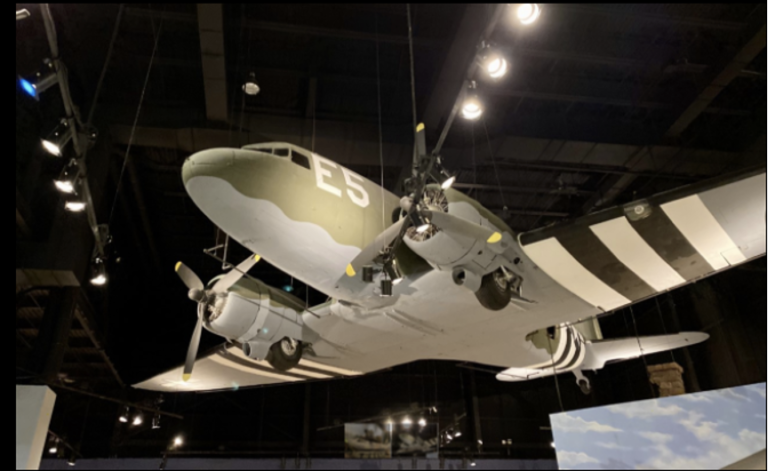
4: The ASOM Was Designed Around These Two Artifacts
Due to the size of the M551 Sheridan Tank and the C-47 “Skytrain”, the ASOM was actually built around the artifacts.

5: Lobby Display
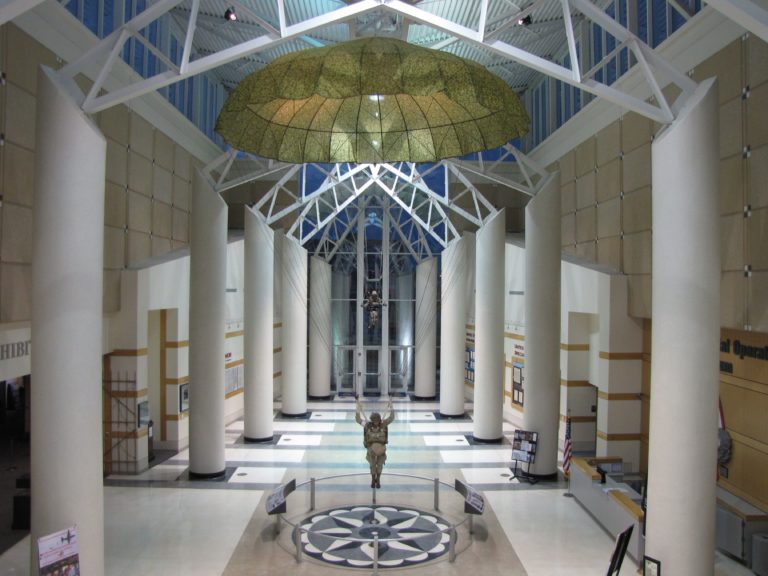
The lobby area of the ASOM features two fully deployed parachutes. One is a WWII era T-5 round chute (foreground) and the other is a modern MC-4 square chute (background).
The round parachute represents the origins of Airborne units, and the integration of Airborne forces into conventional warfare.
The square parachute represents the cutting edge of modern Special Operations forces, and the unconventional warfare they continue to engage in.
Displayed together, these parachutes symbolize the development of Airborne infiltration, and the Soldiers who work in support of one another in the combined Airborne and Special Operations community.

6: The ASOM’s Mission
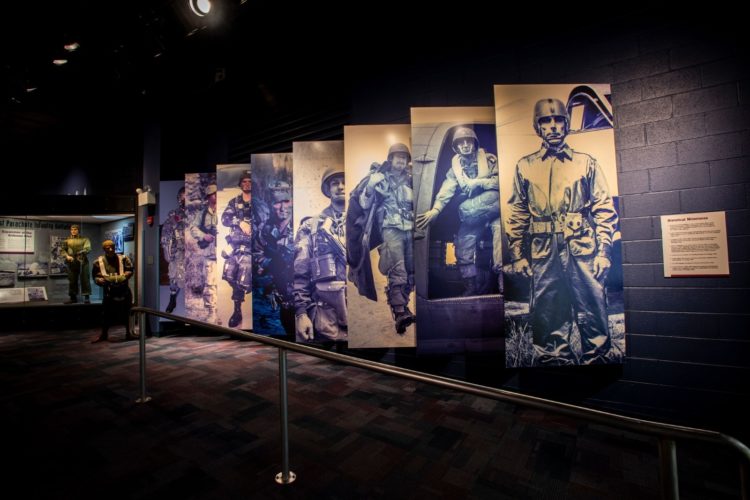
The mission of the U.S. Army Airborne & Special Operations Museum is to engage, educate and inspire the public in regards to the history and legacies of Airborne & Special Operations Soldiers.
To help the ASOM achieve this, please consider giving a gift today.
The ASOM Showcases Local WWII Veteran in New D-Day Exhibit
Recently, the U.S. Army Airborne and Special Operations Museum opened its new temporary exhibit titled “D-Day: Freedom from Above.” This exhibit allows visitors to experience the Normandy Invasion through the eyes of the 82d and 101st Airborne divisions using HistoPad, an augmented reality technology.
Among the interactive elements of the “D-Day: Freedom from Above” exhibit, visitors will also find artifacts that once belonged to local veterans. These pieces were carefully chosen by ASOM Curator Jimmie Hallis through a specific selection process. To be displayed in the exhibit, each artifact had to be related to D-Day and also had to have a connection with the 82d or 101st Airborne Divisions.
Hallis said, “I like artifacts to connect to a story, especially when that story hits close to home … If I can tie it to the local community, it makes it really interesting.”
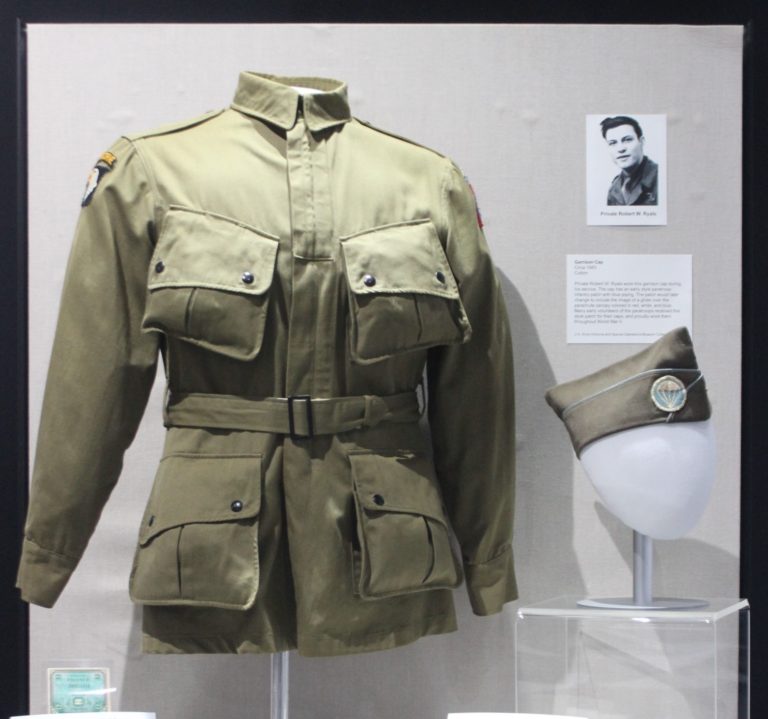
One local veteran featured in the exhibit is Pvt. Robert W. Ryals who was a member of Headquarters and Headquarters Company, 3d Battalion, 501st Parachute Infantry Regiment. A North Carolina native born in Fayetteville, Ryals lived in Southern Pines until his death on Feb. 7, 2011. He survived combat in Normandy, Holland and the Battle of the Bulge, later retiring as a command sergeant major. Visitors of the “D-Day: Freedom from Above” exhibit can view Ryals’ parachutist coat and garrison cap that he wore during the Normandy invasion.
Visitors can learn more local stories by touring the “D-Day: Freedom from Above” exhibit, on display at the ASOM through March 14, 2022. Admission is free, however, there is a $5 rental fee for the HistoPad.
“My ultimate goal for the artifacts is to inspire people with these stories who may be interested in donating to the museum,” Hallis said.
If you would like to help the U.S. Army Airborne and Special Operations Museum continue its mission of educating the public on the legacies of Airborne and Special Operations Soldiers, please click below.
ASOM Brings Local D-Day Stories to Life Through New Interactive Exhibit
Recently, the U.S. Army Airborne and Special Operations Museum (ASOM) opened its new temporary exhibit titled “D-Day: Freedom From Above.” This exhibit allows visitors to experience the Normandy Invasion through the eyes of the 82d and 101st Airborne Divisions using Histopad, an augmented reality technology.
Among the interactive elements of the “D-Day: Freedom From Above” exhibit, visitors will also find artifacts that once belonged to local veterans. These pieces were carefully chosen by ASOM Curator, Jimmie Hallis, through a specific selection process. To be displayed in the exhibit, each artifact had to be related to D-Day and also had to have a connection with the 82d or 101st Airborne Divisions.
Mr. Hallis stated, “I like artifacts to connect to a story, especially when that story hits close to home…If I can tie it to the local community, it makes it really interesting.”
One local veteran featured in the exhibit is Private Robert W. Ryals who was a member of Headquarters and Headquarters Company, 3d Battalion, 501st Parachute Infantry Regiment. A North Carolina native, born in Fayetteville, Ryals resided in Southern Pines until his death on February 7, 2011. He survived combat in Normandy, Holland, and the Battle of the Bulge, later retiring as a Command Sergeant Major. Visitors of the “D-Day: Freedom From Above” exhibit can view Ryals’ parachutist coat and garrison cap that he wore during the Normandy invasion.

Another artifact showcased in the exhibit is a wedding dress cut from Sergeant Eugene Deibler Jr.’s reserve parachute after his jump into Normandy with the 101st Airborne Division. Deibler cut half of his parachute with his jump knife and stored it in his musette bag throughout the campaign. The parachute was given a second life when he mailed it home to his future bride, Mary Smith of Lemon Springs, North Carolina.
Miss Smith made the fabric into her wedding gown, promising to marry Deibler if he returned home from the war. On December 22, 1945, a week after his return to Lemon Springs, the two exchanged vows, fulfilling this promise. The couple then honeymooned in Southern Pines.
“My ultimate goal for the artifacts is to inspire people with these stories who may be interested in donating to the Museum,” stated Mr. Hallis.
Visitors can learn more local stories by touring the “D-Day: Freedom From Above” exhibit, on display at the ASOM through March 14, 2022. The Museum is open on Veterans Day, November 11, 2021. Admission is free, however there is a $5 rental fee for the HistoPad.
Did you enjoy this content? If so, please consider giving a gift to the ASOM so we can continue our mission of sharing the legacies of Airborne and Special Operations Soldiers.
The History of Iron Mike
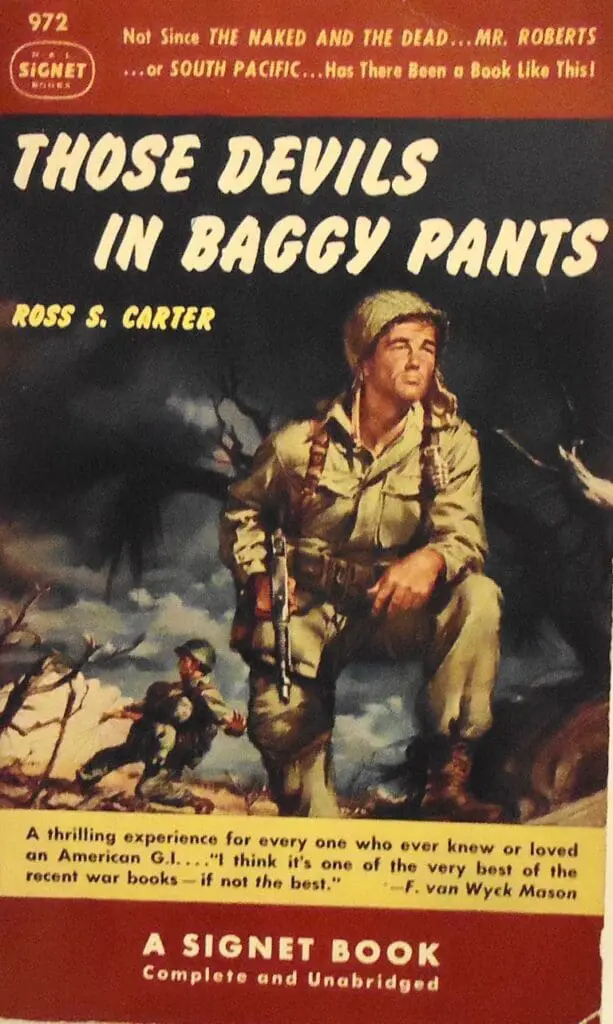
In the spring of 1960, 18th Airborne Corps Commander Lieutenant General Robert Sink appointed Mrs. Leah Hiebert, a military spouse and sculptress, to design and fabricate a statue to encapsulate the spirit of the Airborne trooper. The original idea was inspired by the cover of Ross Carter’s Book, “Those Devils in Baggy Pants”.
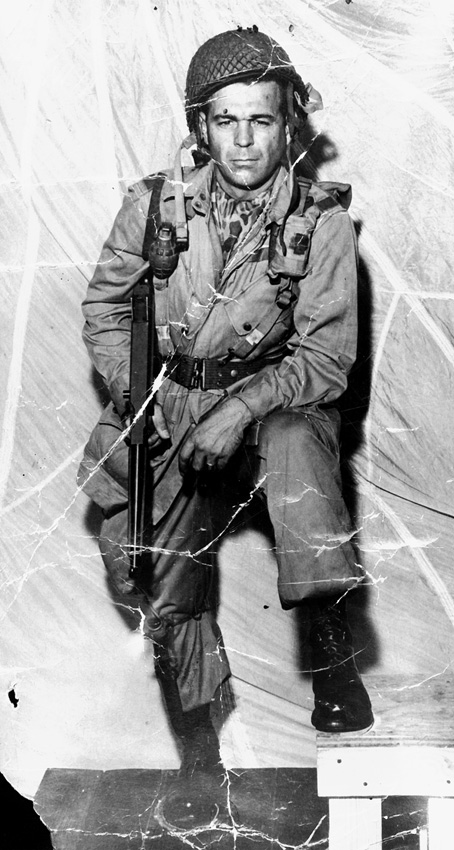
James Runyon was a model for the Iron Mike statue at Fort Bragg
Mrs. Hiebert, whose husband, Samuel L. Hiebert, served as an Army chaplain during World War II, created the statue in an old parachute packing facility. Sergeant MajorJames Runyon was selected as the model for the statue, and posed for over four hours a day, twenty minutes at a time while wearing his own WWII uniform. The photograph below was taken of Runyon to aide in the construction of the statue as it was being developed.
In July of 1960, Mrs. Hiebert completed four clay miniatures of the statue and presented them to Lieutenant General Sink. He then selected the one that served as a guide for the production team during the construction process. By November of 1960, the team fabricated the steel frame. The statue stands with his left foot in a raised position on a pile of rocks, and his upper body leans forward bearing weight on his elbow, which rests on his raised left knee. While the statue is officially named “The Airborne Trooper,” it is colloquially known as “Iron Mike”. The inscription on the base of the statue reads: “Iron Mike, In honor of Airborne Troopers whose courage, dedication, and traditions make them the world’s finest fighting soldiers”.
As the project neared completion, planners began looking for a suitable location to serve as its resting place. It was finally decided that the intersection of Knox Street and Bragg Blvd would house the 15 foot tall, 3,235 pound statue. On September 23, 1961, the statue was revealed. It quickly gained notoriety at Fort Bragg, but due to acts of vandalism, Iron Mike was later moved to the traffic circle between the Fort Bragg Club and the 18th Airborne Corps and Fort Bragg headquarters building in 1979. In 2005, the statue was replaced with a bronze version and the original, which had been deteriorating, was restored and refurbished and was placed at the U.S. Army Airborne & Special Operations Museum in 2010. In 2021, Iron Mike was refurbished again. He still stands watch and welcomes all visitors at the ASOM.
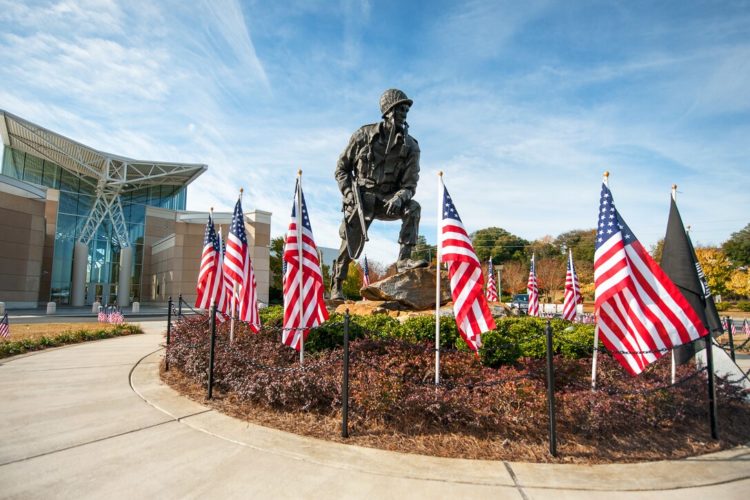
Iron Mike at the ASOM
Did you enjoy this content?
Please consider giving a gift to the ASOM today so we can continue our mission of educating, inspiring, and engaging the public on the legacies of Airborne and Special Operations Soldiers.
Timeline of D-Day and the Roles Airborne and Special Operations Soldiers Played
U.S. Army ground forces were to land on Omaha and Utah Beaches on the East side of the Carentan Peninsula, and then capture the port of Cherbourg. The Seaborne landing on Utah Beach would be preceded by parachute and glider assaults by the 82nd and 101st Airborne Divisions.
In 1943 the Allies decided upon an invasion of Northwest Europe in May 1944. Landing in Normandy, they would capture the channel ports and secure an area for further ground and air operations. Airborne landing in support of the seaborne assault were considered essential to the success of the entire invasion.
.
The 101st Airborne Division’s Role
The 101st Airborne Division was given the task of clearing the way for the seaborne assault by seizing the western exits of four causeways that crossed marshy areas just inland from Utah Beach and then organizing the southern flank of the beachhead. It would also establish bridgeheads across the Dove River for a later drive to the city of Carentan.
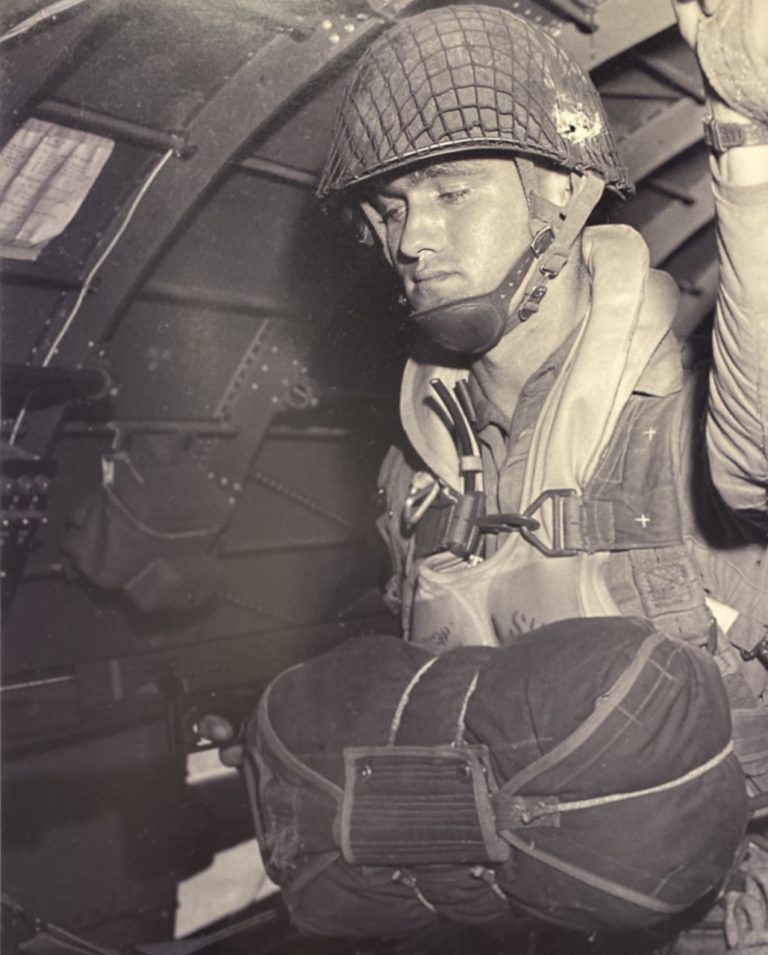
Pictured of a 101st Airborne Division trooper prepares to jump on D-Day.
The Filthy 13
Demolitions Platoon, 3d Battalion, 506th Parachute Infantry Regiment, 101st Airborne Division; nicknamed the Filthy 13.
The Mohawks and war paint were the idea of Private Jake McNiece, who shaved his head to keep away lice, but told the men it was part of his Native American culture, as he was part Choctaw.
The platoon’s mission had the troopers landing south of Vierville and head to the bridges at Le Port on the river Douve and blow or hold the bridges against German counteract. The C-47 plane carrying the Filthy 13 was hit before the drop zone and the men jumped as the plane lost altitude.
The paratroopers set demolition charges on the bridges and waited for the German attack. The Germans came at them, but the Americans held out. On the third day, P-51 Mustangs came and bombed the bridges, unaware it was in American hands, then strafed the paratroopers. Of the Filthy 13, six were sent back to England fit for duty- the rest were killed, wounded, or captured.
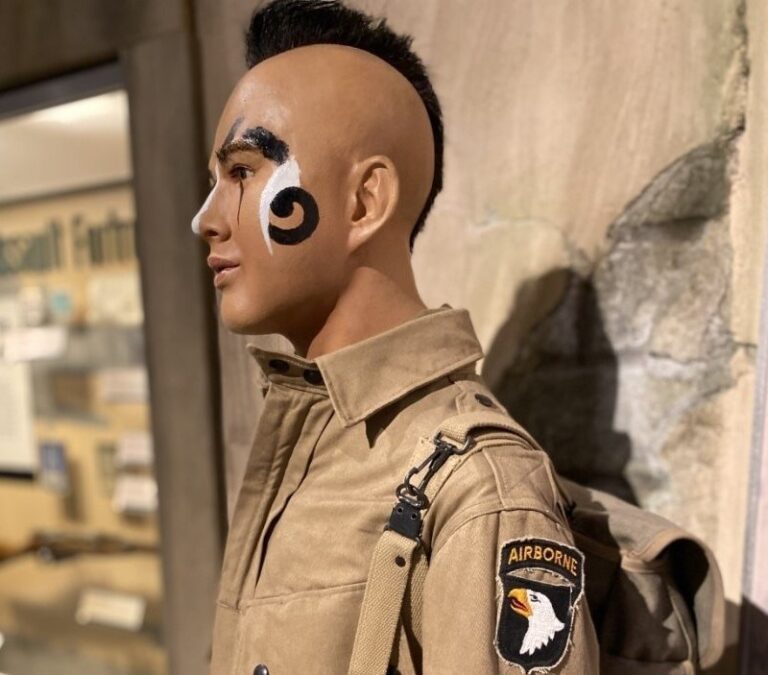
Pictured is a recreation of one of the members of the Filthy 13 on exhibit at the ASOM.
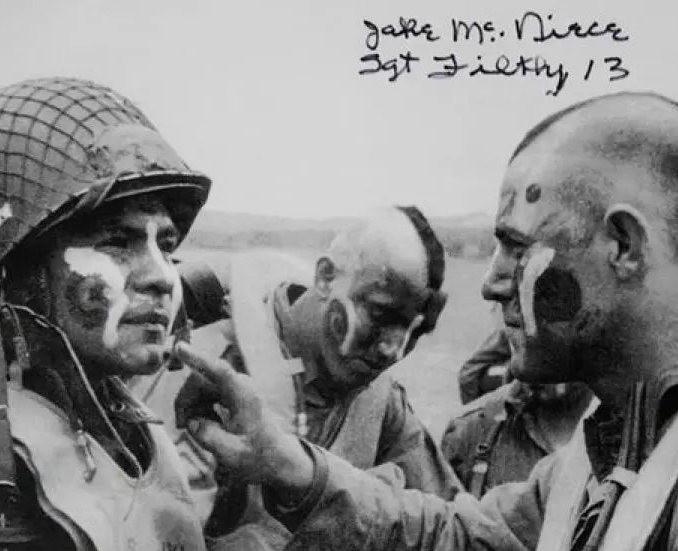
A picture of Jake McNiece, right, applying paint to a fellow paratrooper before D-Day.
The 82nd Airborne Division’s Role
The 82nd would secure the Western edge of the bridgehead by capturing St. Mere Eglise, a key town on the road to Cherbourg. It would also establish deep bridgeheads across the Merderet River to facilitate later attacks to the west.
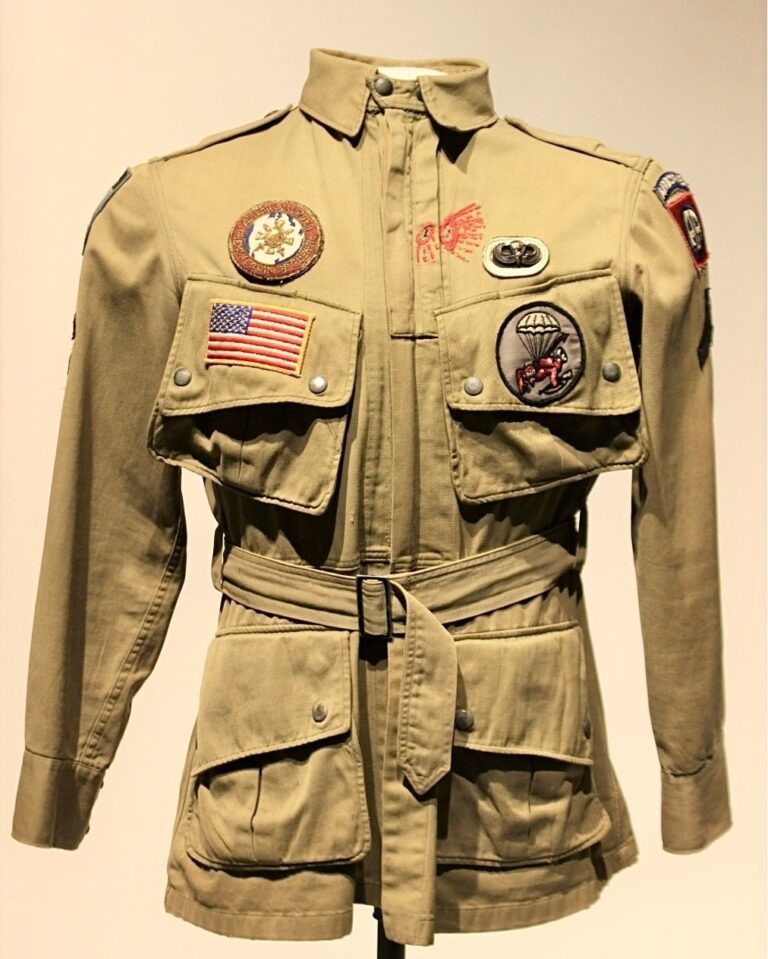
Pictured below is the coat that Private Bob Rooney wore on D-Day. He was wounded during the jump and later embroidered the bullet hole in red.
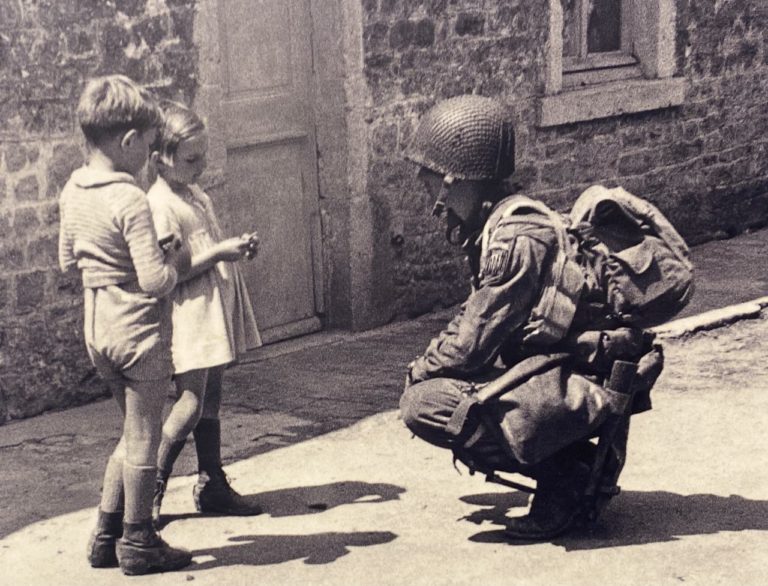
Children from Sainte-Mere-Eglise talk to an 82nd trooper, despite the ongoing battle raging around the town.
The Role of the Rangers
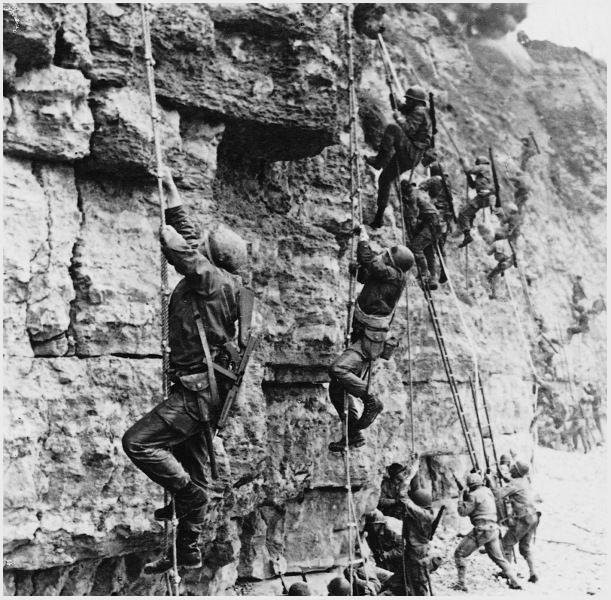
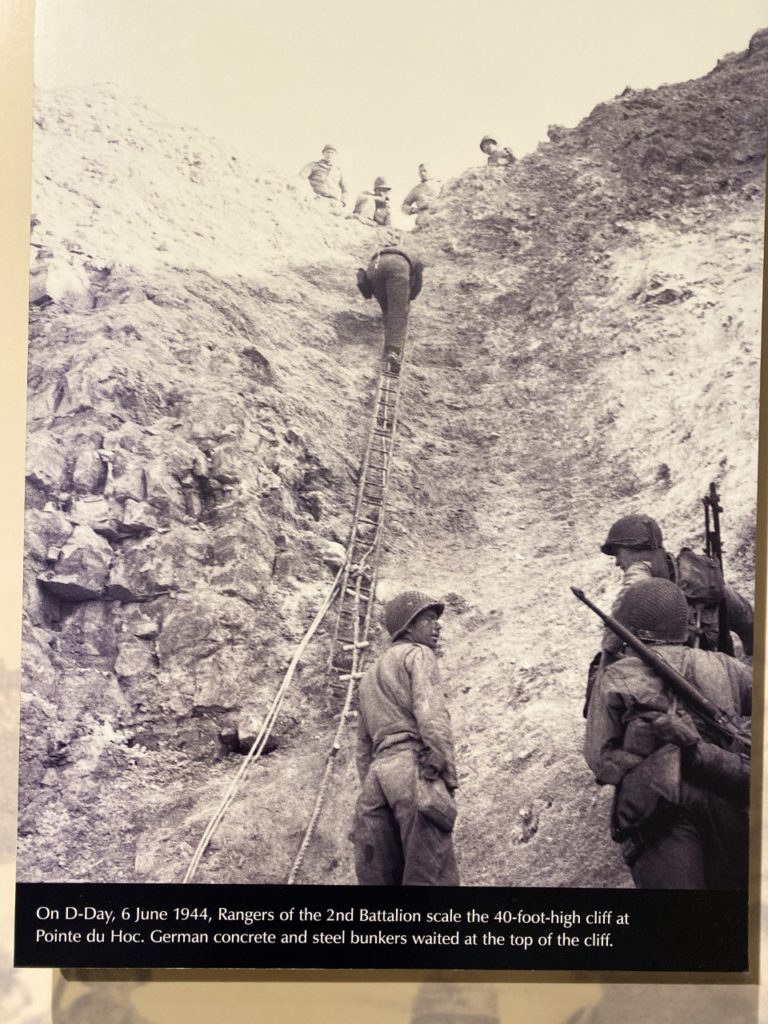
The 2nd Ranger Battalion was assigned the mission of landing by sea and scaling the cliffs at Pointe du Hoc to knock out a battery of German heavy artillery. Rangers from the 2nd and 5th Ranger Battalion would also land on Omaha Beach.
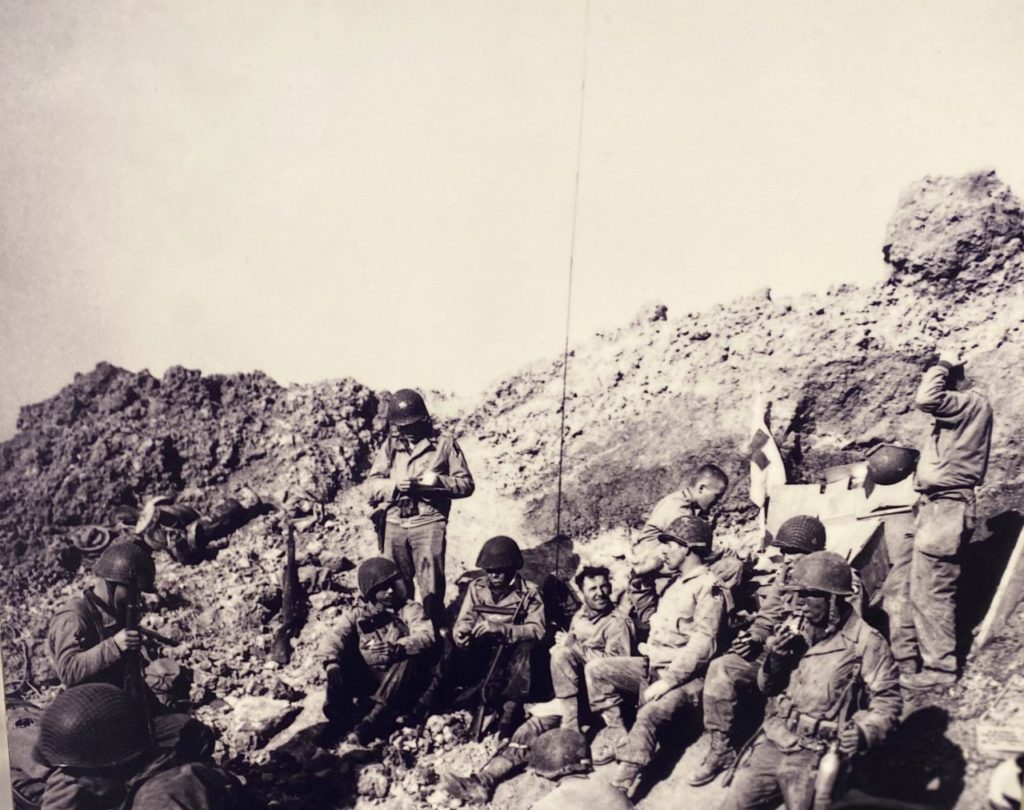
Pictured are Rangers atop Pointe Du Hoc, D-Day, 6, June 1944. Rangers had to fight their way up these cliffs at Pointe du Hoc. From the top, German defenders threw hand grenades and fired at them from fortified positions.
The Outcome
Every D-Day mission assigned to Airborne and Special Operation Units was daunting and carried out in the face of ferocious opposition by the German defenders. Once the mission was underway, things began to go very wrong: American parachute units were badly scattered, Rangers climbed Pointe du Hoc only to find the German guns had been moved, and other Ranger companies landed at Omaha Beach directly into a storm of German machine gun fire. But training, leadership, extraordinary courage and sacrifice won a permanent foothold on the continent. The 82nd Airborne Division’s Commander Matthew B. Ridgway summed up the Normandy campaign this way…”33 days of action without relief, without replacement. Every mission accomplished. No Ground gained ever relinquished.”
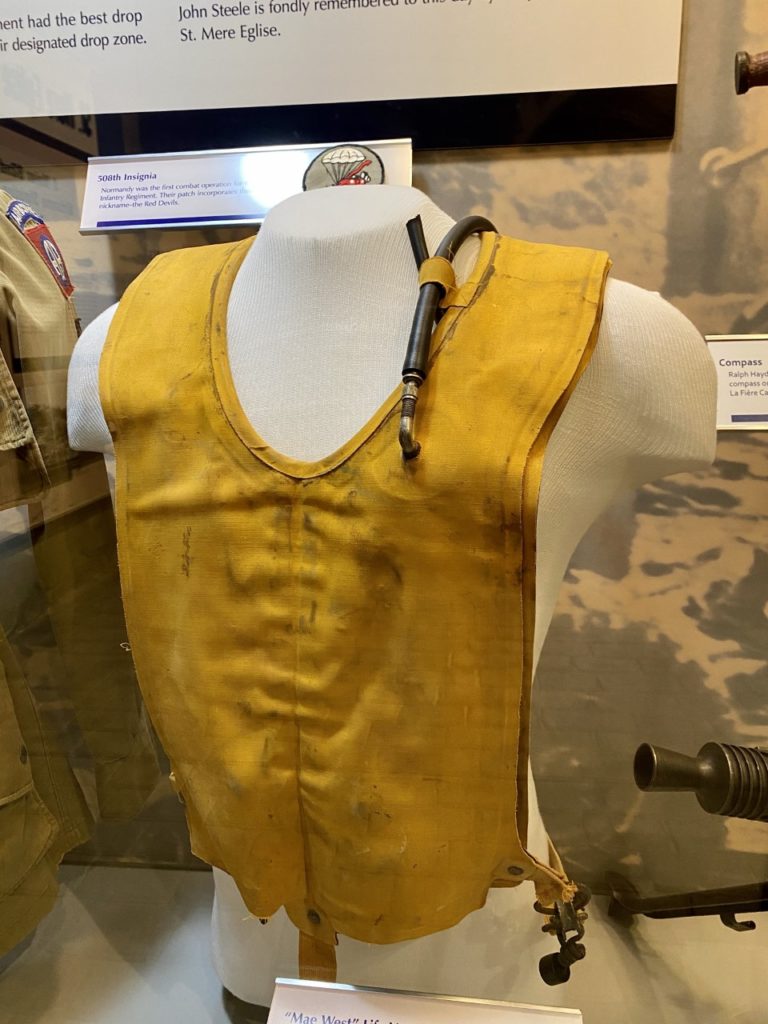
“Mae West” Life Vest: Despite life vests like this, the 507th PIR suffered the worst drop of the day when 25 troops drowned after being dropped into rivers and marshes.
Commemorate the 81st Anniversary of D-Day At the ASOM!
If you can’t make it to France for the 81st anniversary of D-Day, plan a visit to the ASOM. Step aboard a C-47 Skytrain and walk through a recreated Normandy village, transporting you back to war-torn occupied France at the dawn of Europe’s liberation.
Trace the steps of Airborne and Special Operations Soldiers from Operation Torch in North Africa through their triumphs in Europe and the Pacific Theater. Explore the museum’s extensive World War II artifact collection and discover more about the men and women who served and fought for freedom.
Admission to the ASOM is free, but donations are greatly appreciated and needed.
The Role the 82d & 101st Airborne Divisions Played During the Holocaust
As Allied troops moved across Europe in a series of offensives against Nazi Germany, they found tens of thousands of concentration camp prisoners in deplorable conditions. The 82d and 101st Airborne Divisions actually liberated two of these camps, and are officially recognized as liberating units by the US Army’s Center of Military History and the United States Holocaust Memorial Museum. Continue reading to learn more.
The “All Americans” of the 82d Airborne Division Liberate Wöbbelin
The Wöbbelin camp, near the city of Ludwigslust, was a subcamp of the Neuengamme concentration camp. The SS had established Wöbbelin in early February 1945 to house concentration camp prisoners whom the SS had evacuated from other camps to prevent their liberation by the Allies. At its height, Wöbbelin held approximately 5,000 inmates, many of whom were suffering from ill-treatment, starvation and disease.
On May 2, 1945, the US Army’s 8th Infantry Division and the 82d Airborne Division came upon Wöbbelin. Living conditions in the camp when the liberators arrived were wretched. There was little food or water, forcing some prisoners to resort to cannibalism. When the units arrived, they found roughly 1,000 prisoners dead in the camp. In the aftermath, in accordance with a policy mandated by General Dwight D. Eisenhower, the US Army in Ludwigslust ordered “all atrocity victims to be buried in a public place” by the inhabitants of the town. Crosses were to be placed at the graves of Christians and Stars of David at the graves of Jews, along with a stone monument to memorialize the dead.
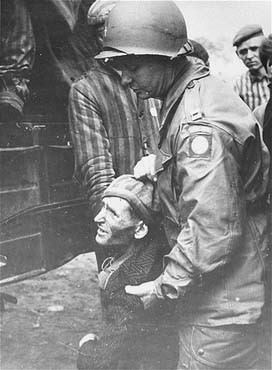
82d Airborne Chaplain helping a survivor.
Photo source: United States Holocaust Memorial Museum.
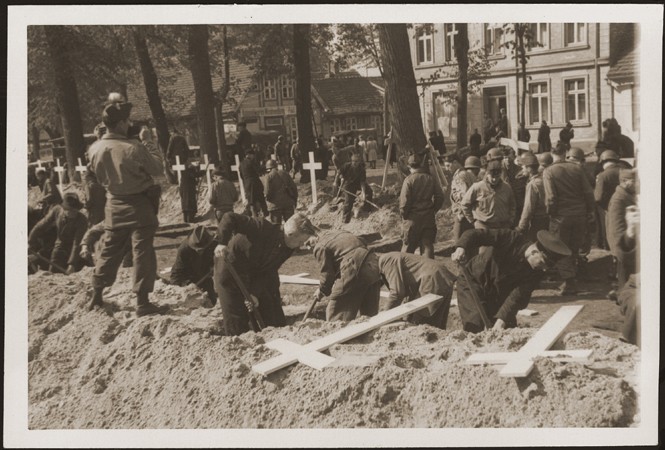
The burial of Wöbbelin victims. Photo source: United States Holocaust Memorial Museum
On May 7th, the 82d Airborne Division conducted funeral services for 200 prisoners in the town of Ludwigslust. Attending the ceremony were citizens of Ludwigslust, captured German officers, and several hundred Soldiers of the 82d Airborne Division. You can see footage of the burial here.
The “Screaming Eagles” of the 101st Airborne Division Liberate Kaufering IV
In April 1945, during the 101st Airborne Division’s drive south into Germany’s Rhineland, the “Screaming Eagles,” as the unit was known, uncovered Kaufering IV, one of 11 concentration camps in the Kaufering complex in the Landsberg region.
At its height, the camp held more than 3,600 prisoners, but in the days before the 101st arrived, the SS had evacuated many of the prisoners on a death march south in the direction of Dachau. Hundreds of inmates were too ill or weak to make the trek, so the SS guards set fire to the barracks at Kaufering IV to prevent their liberation by U.S. troops.
When the US Army’s 12th Armored Division and 101st Airborne Division arrived at Kaufering IV on April 27th and 28th, in that order, the Soldiers discovered some 500 dead prisoners. In the days that followed, the U.S. Army units ordered the local population to bury the dead.
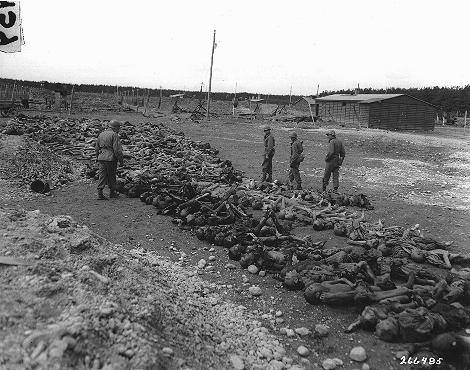
U.S. troops viewing the bodies of victims of Kaufering IV, April 30, 1945.
Photo source: United States Holocaust Memorial Museum.
Today, we remember all of the souls that were lost during this evil and senseless time. For more information regarding the Holocaust, click here.